
Narendra Modi Independence Day Speech 2026: Highlights, Key Announcements and Full Takeaways
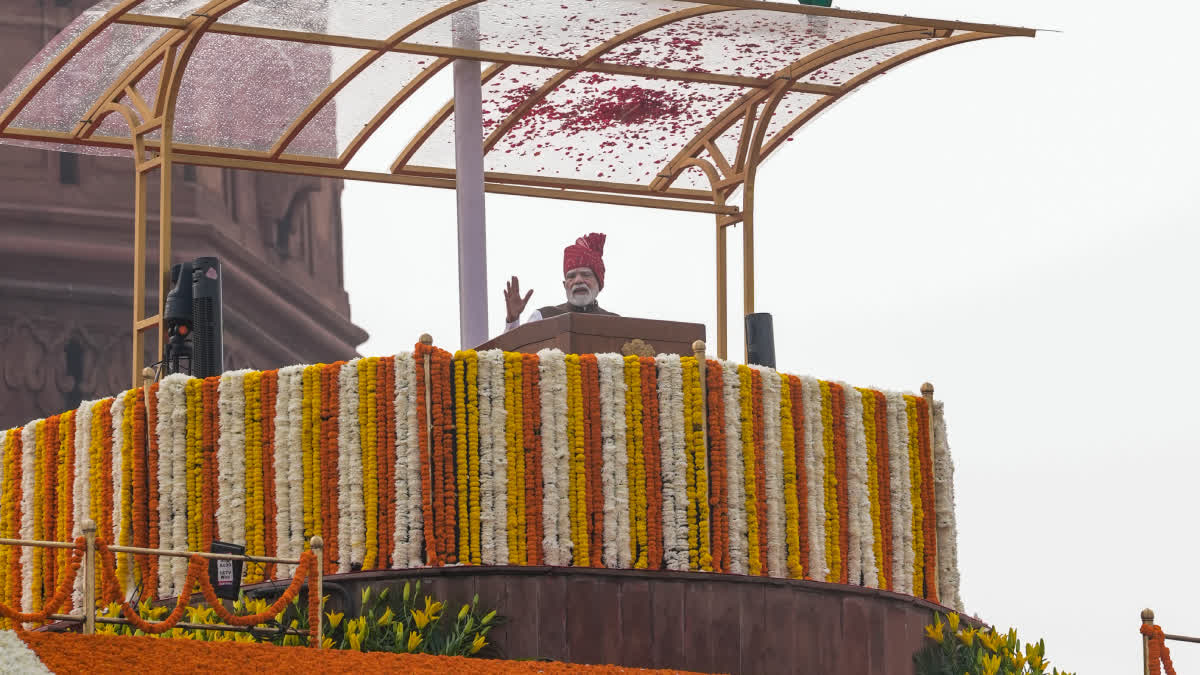
Every year on 15 August, the Prime Minister of India addresses the nation from the ramparts of the Red Fort in Delhi — and the Narendra Modi Independence Day speech delivered on 15 August 2026 was one of the most consequential in recent memory. Marking India's 80th Independence Day, it was Prime Minister Modi's 13th consecutive address from the Red Fort, and it combined a retrospective of twelve years of governance with a forward-looking reform agenda aimed squarely at making India a developed nation by 2047.
The 2026 address stood out for several historic firsts and major announcements: the first-ever singing of Vande Mataram at the Red Fort on an Independence Day occasion, a seven-stream reform framework called Saptadhara, a pledge to train one crore youth in AI skills within a year, free online coaching for competitive examinations, a nationwide sports talent hunt linked to India's 2036 Olympic ambitions, and a target of 100 GW of nuclear power capacity by 2047.
Quick answer: In his 80th Independence Day speech on 15 August 2026, Narendra Modi announced AI skill training for one crore youth, free online coaching for competitive exams, a civil defence network, a 5–15 age-group sports talent hunt for the 2036 Olympics, new semiconductor fabs, five nuclear reactors this decade and a 100 GW nuclear target by 2047, all framed by the seven-part Saptadhara roadmap for Viksit Bharat 2047.
This article brings together the verified highlights, the exact announcements, the key quotes, the historical context of the Red Fort tradition, a year-by-year look at Modi's Independence Day speeches since 2014, and practical guidance on where to watch or read the full address. Where figures come from the Prime Minister's address or official summaries, they are attributed as such.
Table of Contents
- Independence Day 2026 at a Glance
- Key Highlights of Narendra Modi's Independence Day Speech 2026
- The Big Announcements in One Place
- Key Quotes from the 2026 Red Fort Address
- The Red Fort Tradition: Why the Prime Minister's Speech Matters
- Modi's Independence Day Speeches, 2014–2026: Year-by-Year Themes
- Recurring Pillars of Modi's Independence Day Addresses
- How to Watch or Read the Full Speech
- What the 2026 Speech Signals: Analysis
- Frequently Asked Questions
- Conclusion
Independence Day 2026 at a Glance
Before diving into the details, it helps to place the occasion in context. The 2026 ceremony carried symbolic weight beyond the usual flag hoisting and parade, because it opened the final two-decade runway to the centenary of Indian independence in 2047 — the deadline the government has set for the Viksit Bharat (Developed India) project.
| Detail | What Happened in 2026 |
|---|---|
| Date and occasion | Saturday, 15 August 2026 — India's 80th Independence Day |
| Venue | Red Fort (Lal Qila), Delhi |
| Speaker | Prime Minister Narendra Modi — his 13th consecutive Independence Day address |
| Historic first | Vande Mataram sung at the Red Fort on Independence Day for the first time, during the ongoing 150th-year commemoration of the national song |
| Core vision | Viksit Bharat (Developed India) by 2047, when India completes 100 years of independence |
| Reform framework | Saptadhara — seven streams of reform covering manufacturing, food production, technology, connectivity, defence, green-blue economy and soft power |
| Ceremony highlights | Flag hoisting, inspection of the Guard of Honour, tri-services salute, cultural presentations, and greetings extended by world leaders |
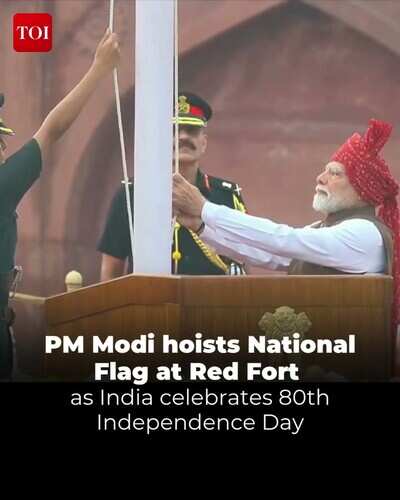
The singing of Vande Mataram was more than a ceremonial addition. Written by Bankim Chandra Chatterjee in the 19th century and later adopted as India's national song, it has long been associated with the freedom movement. Its first rendition at the Red Fort on an Independence Day — during its 150th-year commemoration — was widely covered as the emotional centrepiece of the 2026 celebrations, alongside tableaux and mass formations themed around the journey to 2047.
Key Highlights of Narendra Modi's Independence Day Speech 2026
The address moved through three broad movements: a review of the past twelve years, a reform agenda for the next two decades, and a series of concrete announcements aimed at youth, technology, energy and security. Here is a structured breakdown of the verified highlights.
1. Viksit Bharat 2047 and the Saptadhara reform framework
The organising idea of the speech was that India's development journey now has a fixed deadline. "Today, Bharat too has envisioned a very big dream… when the country completes 100 years of Independence, we will build a 'Viksit Bharat' in 2047," the Prime Minister said, stressing that the goal would be achieved through the collective effort of 140 crore citizens rather than by government action alone.
To get there, he outlined a seven-pronged reform vision — Saptadhara — describing India as being on a "reform express" that now needs the next generation of reforms. The seven streams, as summarised in official and media accounts of the address, are:
- Manufacturing: building complete value chains — from components and design to finished products — so India becomes a trusted hub of global supply chains, competing on cost, quality and scale.
- Food production and processing: turning agricultural strength into a processed-food and export advantage.
- Technology and innovation: leading in artificial intelligence, quantum computing, space technology, robotics, semiconductors and data centres, rather than merely consuming global technology.
- Infrastructure and connectivity: seamless logistics through modern highways, inland waterways and Gati Shakti-style integrated planning.
- Defence: self-reliance in advanced systems and positioning India as a global defence manufacturing hub.
- Green and blue economy: renewable energy, oceans and sustainable growth as economic engines.
- Soft power: yoga, spiritual heritage, holistic healthcare, tourism, and the creative and entertainment economy — including the emerging "concert economy."
The framing matters as much as the list. By packaging reforms as seven interconnected streams, the speech signalled that the government views the 2047 target as a whole-of-economy project, not a collection of isolated schemes.
2. Twelve years of transformation: the numbers Modi cited
A substantial portion of the address was a data-driven review of the period since 2014. According to the Prime Minister's address and official summaries, 25 crore people moved out of poverty, and India transformed from being labelled among the "Fragile Five" vulnerable economies to becoming the world's fastest-growing major economy.
| Indicator | Change Cited in the 2026 Address |
|---|---|
| Defence production | Increased nearly 4 times |
| Defence exports | Increased more than 50 times; equipment now reaching around 100 countries |
| Khadi and village industries production | Increased nearly 5 times |
| Electronics manufacturing | Increased nearly 7 times |
| Modern railway coach production | Increased 21 times |
| Mobile phone production | Increased 35 times |
| Internet users and patents granted | Each increased nearly 4 times |
| Digital transactions | Increased around 100 times |
On basic amenities, the speech contrasted the pace of delivery before and after 2014: tap-water connections reaching households at an annual pace nearly 15 times faster, LPG connections about 6 times faster, toilets for the poor about 4 times faster, and pucca houses about 3 times faster. Social security coverage, the Prime Minister said, has expanded from around 25 crore people before 2014 to roughly 100 crore Indians covered by one or another scheme today, with Ayushman Bharat helping beneficiary families avoid an estimated ₹2 lakh crore in medical expenditure.
Other figures from the address that drew attention included the growth of the bioeconomy from around ₹60,000 crore in 2014 to nearly ₹20 lakh crore today, annual electric vehicle sales rising from about 1.5 lakh towards the end of the previous decade to around 25 lakh last year, and roughly 3.25 crore families receiving property cards under SVAMITVA, unlocking what the address described as enormous rural economic potential.
3. Youth at the centre: AI training, free coaching and a research push
If one demographic dominated the 2026 speech, it was youth. The Prime Minister described young Indians as both the principal drivers and the principal beneficiaries of Viksit Bharat, and backed that claim with three headline initiatives.
First, AI skill training for one crore youth over the coming year. "In the coming one year, we will work to provide AI skill training to one crore youth, so that India's youth can lead in the AI era," he said, placing artificial intelligence alongside quantum technology, space, robotics and data centres as frontiers where India must lead rather than follow.
Second, free online coaching for competitive examinations, aimed directly at the financial pressure coaching centres place on families. "Coaching classes burden the poor and the middle class. We will provide free online coaching for various exams," the Prime Minister said, adding that the government would leverage its digital public infrastructure, educators and technology platforms to build a nationwide network of free coaching.
Third, a broader innovation ecosystem: more than 2.5 lakh registered startups, a research and innovation fund in the region of ₹1 lakh crore, more than 10,000 Atal Tinkering Labs in schools, and an education expansion that saw around 650 new universities added in the past decade and medical colleges rise from fewer than 400 before 2014 to around 850 today. The National Education Policy 2020 — the first education policy overhaul in 35 years — was cited as part of this transformation.
4. Defence, security and a Naxal-free resolve
Security received unusually detailed treatment for an Independence Day speech. The Prime Minister reiterated the vision of India as a global defence manufacturing hub, with self-reliance in advanced technologies such as hypersonic systems, drones and counter-drone platforms. He confirmed that work on Sudarshan Chakra, an indigenous air-defence system, was progressing rapidly — a notable public reference to a programme that has become a symbol of India's strategic ambitions.
On internal security, the address announced plans for a comprehensive civil defence network with enhanced training and capabilities, reflecting a renewed emphasis on preparedness for both external and internal threats. The Prime Minister also declared a resolve to make India Naxal-free, stating that Naxalism and Maoism had damaged parts of the country and urging that those with a Naxal mentality be identified and isolated.
The defence-economy numbers cited in the speech underlined the scale of the shift: defence production up nearly fourfold, defence exports up more than fiftyfold, and Indian defence equipment now reaching approximately 100 countries — a transformation from one of the world's largest arms importers to a growing exporter.
5. Technology: semiconductors, 6G and critical minerals
The speech positioned technology as the third stream of Saptadhara and arguably its engine room. The Prime Minister noted that India, which previously had no major semiconductor manufacturing plant, has now begun production at three semiconductor plants and has even started exporting chips. He added that five to eight more plants are expected in the coming seven to eight years.
Beyond chips, the address set an ambition to take Made-in-India 6G technology to the world and to export India's Digital Public Infrastructure — the stack of identity, payments and service-delivery systems that has drawn global attention. On inputs, the speech referenced the National Critical Mineral Mission and the Critical Mineral Corridor announced in the Budget, alongside agreements with several countries for critical mineral supplies, recognising that minerals are to the 21st century what oil was to the 20th.
6. Energy security: nuclear expansion and the renewable surge
Energy security was framed as "the demand of the time," especially in an era when AI, semiconductors and data centres consume enormous quantities of electricity. The headline commitments were:
- A target of 100 GW of nuclear power capacity by 2047, enabled by the SHANTI Act, the landmark reform of India's nuclear energy framework.
- Five new nuclear reactors to be operationalised within this decade.
- A milestone in fast breeder nuclear technology, which the address described as key to making India self-reliant in nuclear fuel.
The renewable and gas story was equally striking in the numbers cited: solar capacity rising from around 2 GW in 2014 to well over 100 GW today; city gas distribution expanding from fewer than 70 cities to around 700; piped cooking gas reaching from around 20–22 lakh households to crores of households; and the PM Surya Ghar Muft Bijli Yojana crossing 50 lakh households, with assistance of up to around ₹80,000 per household and the option for families to sell surplus solar power.
Two further energy highlights stood out. Indian Railways, which had electrified only around 30 percent of its network in roughly 90 years up to 2014, has moved to near-complete electrification, and India has begun work on what is described as the world's longest and most powerful Made-in-India hydrogen train. Offshore exploration, meanwhile, has shifted from a "no-go" to a "go-ahead" approach, with nearly 99 percent of India's offshore area previously classified as no-go now opened for exploration.
7. Sports: the 2036 Olympics and a nationwide talent hunt
Sports policy got one of the clearest announcements of the day. The Prime Minister said India is a strong contender to host the 2036 Olympic Games and set a target that India should participate in at least three-fourths of Olympic events by then. To build the pipeline, he launched a nationwide talent hunt for children aged 5 to 15, covering villages, cities and schools, with selected youngsters receiving specialised training to become world-class athletes.
8. Women's empowerment and the quota appeal
On women's participation in public life, the Prime Minister urged all political parties to rise above differences so that the promise of 33 percent reservation for women under the Nari Shakti Vandan Adhiniyam is realised, appealing for consensus above political vendetta. The speech also celebrated the achievement of the 3 crore Lakhpati Didi target, with women from general, Dalit, backward and tribal families becoming Lakhpati Didis — a flagship example of the government's "women-led development" framing.
9. Corporate ambition: Fortune 500 and global champions
The address set explicit benchmarks for Indian business: 50 Indian companies among the Fortune 500 within the next decade, at least one Indian bank among the world's top five, and Indian pharmaceutical, consulting, accounting and technology firms ranking among global leaders. The message to the corporate sector was unmistakable — domestic success is no longer the ceiling; global leadership is the expectation.
10. Census participation, resilience and citizen duty
Closing themes tied citizenship to development. The Prime Minister urged young people to actively participate in the ongoing Census, stressing that accurate demographic data is essential for policymaking, and asked citizens to devote time to the enumeration process. He also pointed to India's calm handling of successive global shocks — the COVID-19 pandemic, the Russia-Ukraine war and West Asia conflicts — as evidence that capabilities built over the last decade held up under pressure, saying India maintained the spirit of "Nagarik Devo Bhav" while others thrived on fear-mongering.
On farmer protection, the speech cited the subsidy shield that keeps urea available to Indian farmers for less than ₹300 a bag against an international price of around ₹3,000, and DAP at ₹1,350 against more than ₹5,000 globally. And on trade, it noted that India has entered into free trade agreements with around 40 countries since 2014, opening opportunities for agriculture, fisheries, MSMEs and textiles.
The Big Announcements in One Place
For readers who want the actionable outcomes of the 2026 address without the narrative, here is the compact list of the major announcements, as reported in official summaries and leading news coverage:
| Announcement | Scope and Timeline |
|---|---|
| AI skill training for one crore youth | To be delivered over the coming one year |
| Free online coaching for competitive exams | Nationwide network using digital public infrastructure |
| Nationwide sports talent hunt | Children aged 5–15, in villages, cities and schools; linked to 2036 Olympic participation targets |
| Civil defence network | Comprehensive network with enhanced training and capabilities |
| Semiconductor expansion | Three plants already in production and exporting; five to eight more plants expected in the coming years |
| Nuclear energy push | Five new reactors this decade; 100 GW nuclear capacity by 2047 under the SHANTI Act framework |
| Saptadhara reform agenda | Seven streams of next-generation reforms targeting Viksit Bharat by 2047 |
Alongside these, the speech set aspirational benchmarks rather than scheme announcements — 50 Fortune 500 companies in a decade, a top-five global Indian bank, and a Naxal-free India — which are best read as policy directions for ministries rather than dated programmes.
Key Quotes from the 2026 Red Fort Address
The most widely shared lines from the speech, as reported in official and media accounts, capture its tone — ambitious, data-heavy and deliberately addressed to the young:
"Today, Bharat too has envisioned a very big dream… when the country completes 100 years of Independence, we will build a 'Viksit Bharat' in 2047."
"In the coming one year, we will work to provide AI skill training to one crore youth, so that India's youth can lead in the AI era."
"Coaching classes burden the poor and the middle class. We will provide free online coaching for various exams."
"Energy security is the demand of the time. With the SHANTI Act passed in Parliament, we have created the framework to achieve our goal… We aim to start five new nuclear reactors in this decade."
"Let us together build a developed India."
The Red Fort Tradition: Why the Prime Minister's Speech Matters
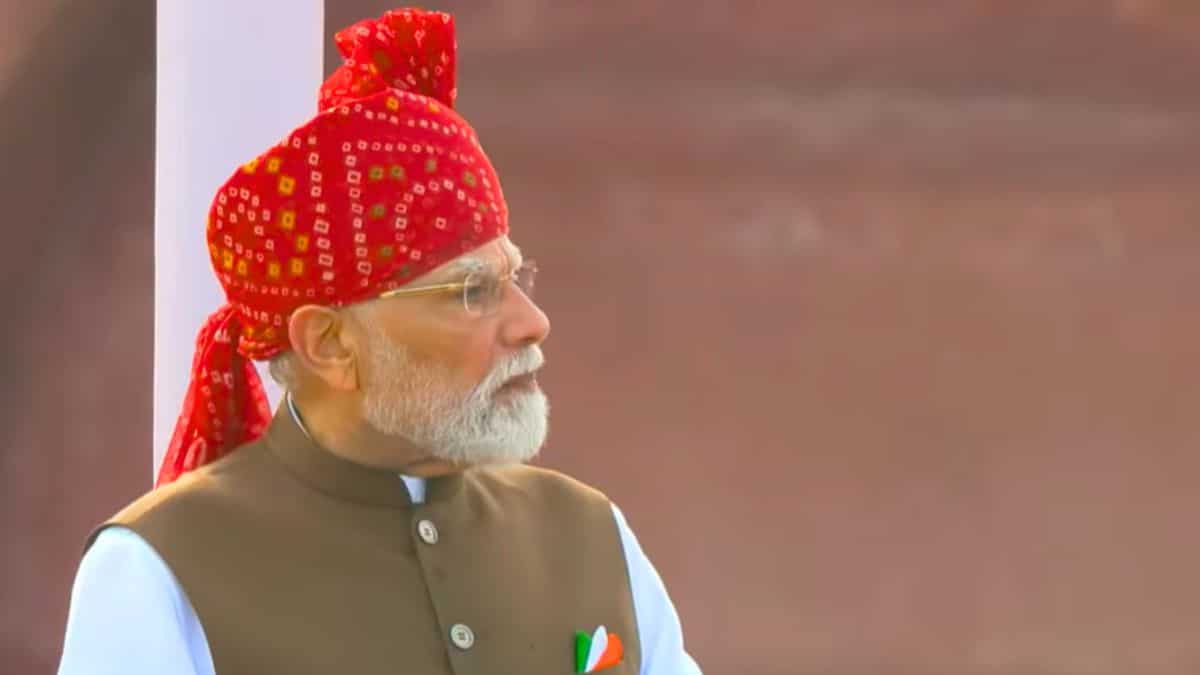
To understand why a single speech draws hundreds of millions of viewers, it helps to understand the ritual itself. On 15 August 1947, Jawaharlal Nehru hoisted the national flag above the Lahori Gate of the Red Fort and addressed the nation, establishing a tradition that every subsequent Prime Minister has continued. The Red Fort — a Mughal-era fortress and a potent symbol of sovereignty — is where the country hears its annual report card and its statement of intent.
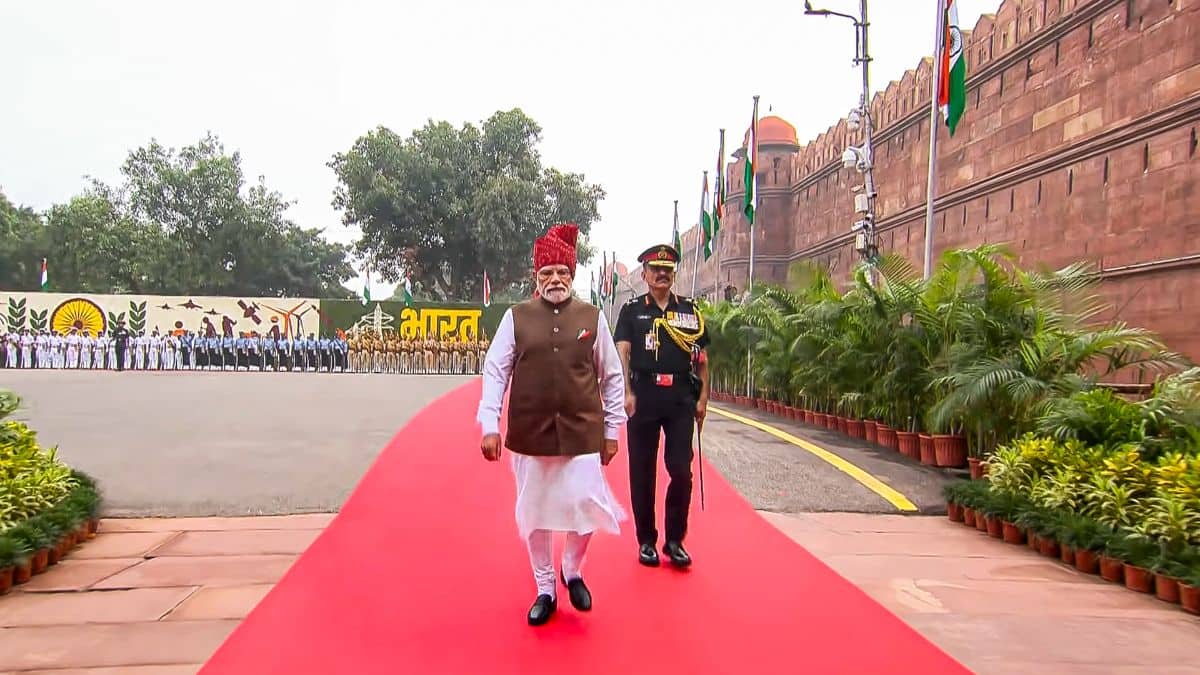
The ceremony follows a well-established sequence: the Prime Minister is received at the gate, inspects a Guard of Honour drawn from the three armed forces and paramilitary units, hoists the national flag, observes the national salute as the flag is saluted by the guard, and then delivers the address to the nation. The speech traditionally reviews the year gone by, honours martyrs and soldiers, and announces the government's priorities for the year ahead.
A useful distinction that often causes confusion: on Independence Day, the Prime Minister hoists the flag at the Red Fort — the flag is pulled up from below the pole, symbolising a nation rising. On Republic Day, the President unfurls the flag at Kartavya Path — the flag is already at the top and is unfolded, symbolising the continuity of the constitutional republic. The two ceremonies, though visually similar, carry different constitutional meanings.
For Narendra Modi, the Red Fort address has also become a personal record. First delivered in 2014, his 2026 speech was his 13th consecutive address, making him one of the longest-serving occupants of the ramparts in Indian history, second in cumulative tenure only to the era of Jawaharlal Nehru and, later, Indira Gandhi. Over those thirteen addresses, the speeches have functioned as a running documentary of his premiership — from the "Come, make in India" invitation of 2014 to the Saptadhara roadmap of 2026.
Modi's Independence Day Speeches, 2014–2026: Year-by-Year Themes
Read together, the thirteen addresses form a coherent arc: early years focused on mindset and manufacturing, middle years on welfare architecture and self-reliance, and the most recent years on the 2047 deadline. The table below summarises the dominant theme of each address based on widely reported coverage.
| Year | Dominant Themes and Notable Announcements |
|---|---|
| 2014 | First address; "Team India"; invitation to global manufacturers to "make in India"; call for a cleanliness mission and for MPs to adopt villages |
| 2015 | Beti Bachao Beti Padhao; skill development; changing mindsets about girls and poverty |
| 2016 | Startups, digital empowerment and "maximum governance, minimum government" |
| 2017 | "Sankalp se siddhi" (from resolve to fulfilment); focus on the poor, farmers and inclusive growth |
| 2018 | Health, education and human capital; groundwork for the Ayushman Bharat era |
| 2019 | Water conservation as a people's movement; announcement of the Jal Jeevan Mission for piped water to every household |
| 2020 | Atmanirbhar Bharat and "Vocal for Local" amid COVID-19; announcement of the National Digital Health Mission |
| 2021 | 75th Independence Day; announcement of the PM Gati Shakti national master plan; framing of the Amrit Kaal |
| 2022 | Panch Pran — five resolutions for the Amrit Kaal, including developed India, pride in heritage, and women's and youth power |
| 2023 | Viksit Bharat resolve; science and space pride; women-led development |
| 2024 | First address of the third term; poor-centric welfare, digital public infrastructure and national unity |
| 2025 | Tribute to the armed forces after Operation Sindoor; self-reliance and the Viksit Bharat @2047 push |
| 2026 | 80th Independence Day; Saptadhara reforms; AI skilling; nuclear and semiconductor expansion; 2036 Olympic ambition |
Several of these addresses doubled as launch pads. The Jal Jeevan Mission (2019), the National Digital Health Mission (2020) and PM Gati Shakti (2021) were all announced from the Red Fort, which is why analysts treat the Independence Day speech as a reliable indicator of the government's next big policy bet. The 2026 announcements — particularly the AI skilling mission and the civil defence network — are likely to be remembered in the same category.
Recurring Pillars of Modi's Independence Day Addresses
Beyond the year-by-year themes, five pillars recur across all thirteen speeches and are clearly visible in the 2026 address as well.
Self-reliance with openness. From "make in India" in 2014 to Atmanirbhar Bharat in 2020 to the 2026 conviction that "India must not be dependent on other countries," the thread is consistent: build domestic capability while remaining globally engaged, as shown by the emphasis on around 40 free trade agreements and global supply-chain integration.
Technology as mass infrastructure. Digital India began as connectivity and affordable data; it matured into Digital Public Infrastructure; and in 2026 it reached the stage of exporting that infrastructure and aiming for Made-in-India 6G. Each speech has treated technology less as an industry and more as a public utility.
Women-led development. From Beti Bachao Beti Padhao to Lakhpati Didi to the appeal for consensus on women's reservation, the speeches consistently position women as agents of growth rather than beneficiaries of welfare.
Youth and human capital. Skill India, Khelo India, startup promotion, Atal Tinkering Labs, the 2026 AI training mission and the 5–15 talent hunt all flow from a single premise repeated in the 2026 speech: the biggest beneficiary — and builder — of Viksit Bharat is the Indian youth.
Security as development. Defence manufacturing, civil defence, a Naxal-free resolve and tribute to the armed forces have steadily moved from the margins of the speeches to their centre, reflecting a doctrine that economic ambition is inseparable from strategic preparedness.
How to Watch or Read the Full Speech
Because the Independence Day address is a national event, it is among the easiest speeches of the year to access in full. Readers looking for the complete Narendra Modi Independence Day speech — live, replayed, or in text — have several reliable options:
- Television: Doordarshan's national channel and DD News broadcast the ceremony live every 15 August, with replays through the day.
- Official text: The Prime Minister's Office publishes the address and its highlights on the official pmindia.gov.in website, and the Press Information Bureau (PIB) issues detailed summaries and releases, including English renderings of the speech.
- Radio and audio: All India Radio carries the live address, and official podcasts archive it afterwards.
- Online video: The official YouTube channels of Doordarshan, DD News and the Prime Minister's Office host the full video shortly after the event, in Hindi and with translated versions.
- Mobile: The Narendra Modi app and the official PM India app stream the address and provide transcripts and highlights.
For students, researchers and journalists, the PIB and PMO text versions are the most citation-safe sources, since they carry the official rendering rather than live-broadcast paraphrases. Regional-language translations typically follow within a few days of the address.
What the 2026 Speech Signals: Analysis
The following is editorial analysis, clearly separated from the verified facts above.
Three signals stand out. First, the 2026 address was less a celebration of the past and more a project plan for 2047. By naming seven reform streams and attaching numeric benchmarks — 100 GW of nuclear, 50 Fortune 500 firms, a top-five bank, three-fourths Olympic participation — the speech attempted to convert a slogan (Viksit Bharat) into a measurable contract. Whether every target is met, the benchmarks will shape ministry-level planning for years.
Second, the speech's centre of gravity has shifted from welfare delivery to capability building. The 2014–2019 addresses leaned heavily on toilets, gas connections, houses and water — and the 2026 speech still cited their delivery pace. But the new announcements (AI skilling, free coaching, talent hunts, semiconductor fabs, civil defence) target the middle of the development curve: skills, technology and security. That is the profile of a government attempting to move the economy from consumption-led welfare to production-led growth.
Third, the address treated uncertainty as a permanent condition. References to COVID, the Ukraine war, West Asia conflicts, energy security, critical minerals and civil defence all assume a volatile decade ahead. The implied doctrine — that resilience, not just growth, is the measure of success — is likely to define the policy tone of the remaining run-up to the independence centenary.
None of this guarantees outcomes. Targets announced from the Red Fort have historically been met unevenly, and readers should treat the 2047 benchmarks as stated ambitions, to be tracked against official data in the years ahead. What the speech reliably reveals is priority — and in 2026, the priorities were unmistakably AI, energy, defence, youth and reform.
Frequently Asked Questions
What did PM Modi announce in the 2026 Independence Day speech?
The major announcements included AI skill training for one crore youth within a year, free online coaching for competitive exams, a nationwide sports talent hunt for children aged 5–15, a comprehensive civil defence network, five to eight additional semiconductor plants, five new nuclear reactors this decade, and a 100 GW nuclear power target by 2047, all under the Saptadhara reform framework for Viksit Bharat.
Which Independence Day did India celebrate on 15 August 2026?
India celebrated its 80th Independence Day on 15 August 2026. The count follows the convention of treating 15 August 1947 as the first Independence Day, which is also why 2022 was called the 76th and the 2047 centenary will mark 100 years of independence.
Was Vande Mataram really sung at the Red Fort for the first time in 2026?
Yes. According to official and media accounts of the 80th Independence Day celebrations, Vande Mataram was sung at the Red Fort on an Independence Day occasion for the first time, during the ongoing 150th-year commemoration of the national song written by Bankim Chandra Chatterjee.
What is the Saptadhara framework mentioned in the speech?
Saptadhara ("seven streams") is the seven-part reform agenda outlined in the 2026 address: manufacturing, food production and processing, technology and innovation, infrastructure and connectivity, defence, the green and blue economy, and soft power. It is the government's stated route map to Viksit Bharat by 2047.
What exactly was said about the 2036 Olympics?
The Prime Minister said India is a strong contender to host the 2036 Olympic Games and set a target of participating in at least three-fourths of Olympic events. To build the athlete pipeline, he launched a nationwide talent hunt for children aged 5 to 15, with specialised training for those selected.
What is the nuclear power target announced by Modi in 2026?
The speech set a target of 100 GW of nuclear power capacity by 2047, enabled by the SHANTI Act, and said five new nuclear reactors would be operationalised within the current decade. A milestone in fast breeder nuclear technology was also highlighted as a step toward fuel self-reliance.
Where can I read or watch the full Narendra Modi Independence Day speech 2026?
The full address is available on the official Prime Minister's Office website (pmindia.gov.in) and through Press Information Bureau releases, while Doordarshan, DD News and official YouTube channels carry the complete video. Regional-language translations are published by official sources in the days following the address.
Conclusion
The Narendra Modi Independence Day speech of 15 August 2026 will be remembered as the address in which the 2047 deadline stopped being a slogan and became a work plan. The 80th Independence Day gave the occasion its symbolism — the first Vande Mataram at the Red Fort, the tricolour above the Lahori Gate for eight decades — but the substance was relentlessly forward-looking: one crore youth to be trained in AI, free coaching to ease the burden on families, a talent hunt to chase the 2036 Olympics, new semiconductor fabs, five nuclear reactors this decade and a seven-stream reform agenda.
Whether every benchmark is achieved will only be clear as India approaches its centenary. What is already clear is that the 2026 Red Fort address set the national to-do list for the next twenty years — and invited 140 crore citizens to treat Viksit Bharat not as a government promise but as a shared project. As the Prime Minister put it in closing: "Let us together build a developed India."
Stay informed: bookmark this page for updated explainers on the schemes announced in the 2026 address — from the AI skilling mission to the Saptadhara reforms — as official implementation details are published, and share this summary with anyone who wants the full picture of the 80th Independence Day speech without watching the entire broadcast.