
Attorney General Todd Blanche Remarks: Key Speeches, Quotes, and What They Signal for the Justice Department
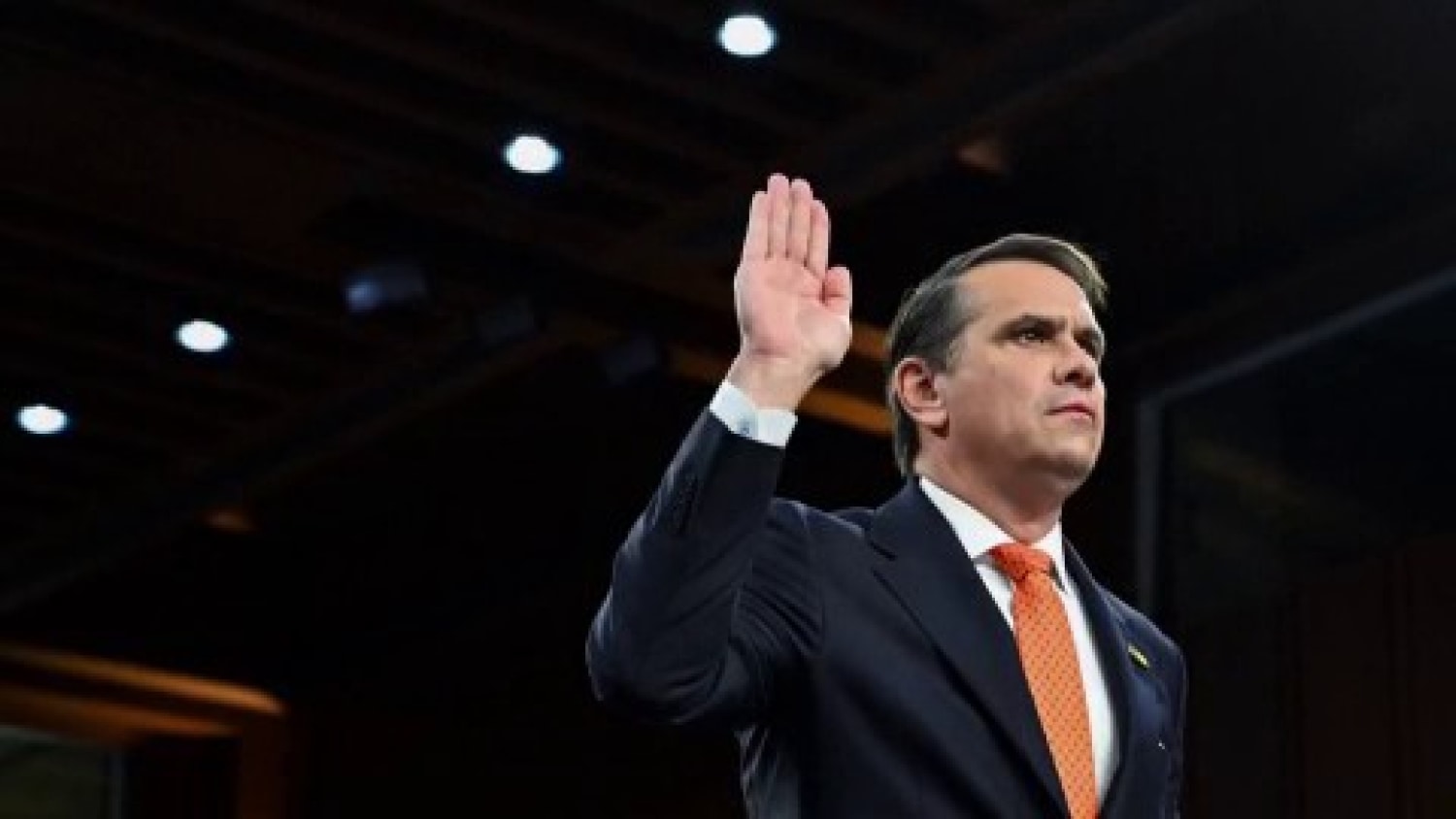
Few figures in modern American law have moved as quickly from defense table to Main Justice as Todd Blanche. After serving as President Donald Trump's personal criminal defense lawyer, then as the 40th U.S. Deputy Attorney General, Blanche was confirmed by the Senate on August 8, 2026 by a 50–49 vote and sworn in on August 10, 2026 as the 88th Attorney General of the United States. Every public statement he makes is now read closely — by DOJ employees, by Congress, by defense lawyers, and by anyone watching the boundary between the White House and the Justice Department.
That is why searches for Attorney General Todd Blanche remarks have surged. His statements — from his first address to the DOJ workforce on August 13, 2026, to his Sunday-morning television appearances on August 16, 2026, where he declined to pledge full independence from the White House — are among the most consequential public comments made by a Justice Department leader in years.
This article compiles the most important Todd Blanche remarks on the record, organized chronologically and by topic, with dates and attribution for each. It separates what he actually said from the commentary around it, flags where reporting is the only source for a quote, and clearly labels analysis as analysis. It was last updated on August 17, 2026, and reflects remarks and reporting published on or before that date.
Table of Contents
- Key Takeaways: Todd Blanche Remarks at a Glance
- Who Is Todd Blanche? A Short Biography
- Timeline: From Defense Lawyer to the 88th Attorney General
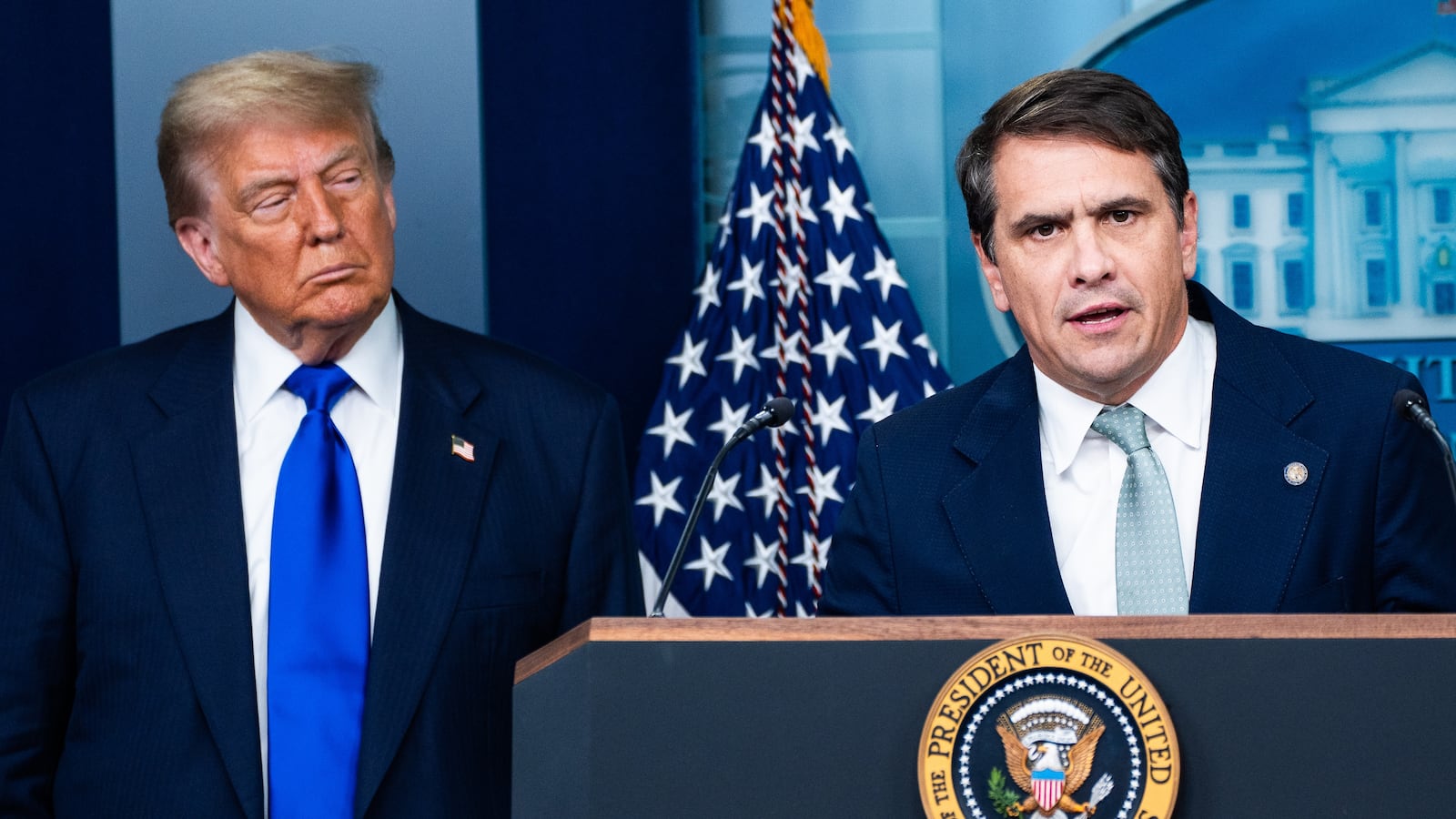
- Attorney General Todd Blanche Remarks to DOJ Staff: The First Workforce Address
- "Without Fear or Favor": The DOJ Independence Remarks of August 16, 2026
- The July 2026 Confirmation Hearing Remarks
- Todd Blanche Remarks on the Epstein Files
- Enforcement Priorities and Policy Remarks as Deputy and Attorney General
- What the Remarks Signal: Analysis
- How to Follow Todd Blanche's Remarks Going Forward
- Frequently Asked Questions
- Conclusion: A Department in the Blanche Era
Key Takeaways: Todd Blanche Remarks at a Glance
If you only have a minute, here is the verified core of the story:
- He is the Attorney General, not the Deputy. Blanche served as Deputy Attorney General from March 2025 to August 2026, became acting Attorney General on April 2, 2026 after President Trump fired Pam Bondi, and was confirmed as the 88th U.S. Attorney General on August 8, 2026 by a 50–49 Senate vote.
- His first workforce address struck a humble tone. On August 13, 2026 he told DOJ employees, "I will not get every decision right," encouraged internal disagreement, and listed violent crime, drug trafficking, gangs, immigration enforcement, fraud against the government, and appellate work as priorities.
- He declined to pledge DOJ independence from the White House. On August 16, 2026 he said prosecutors will act "without fear or favor" and "with integrity," but stated the president is entitled to set broad law-enforcement priorities and that, "of course," he will take the president's views into consideration.
- He declared the "anti-weaponization" fund dead. The proposed $1.8 billion compensation fund for people who claim they were politically prosecuted "is dead," Blanche said on August 16, 2026, though ordinary legal claims against the government remain available.
- On the Epstein files, he mixed apology with defense. He apologized to survivors for problems in the release process while arguing the Trump administration "has been more transparent than any past administration."
Who Is Todd Blanche? A Short Biography
Understanding the remarks requires understanding the man behind them, because Blanche's career is the central tension in nearly every question he is asked.
Todd Wallace Blanche was born on August 6, 1974, in Denver, Colorado, and raised there before his family moved to Gainesville, Florida. He attended American University, where he earned his bachelor's degree, and Brooklyn Law School, where he graduated cum laude in 2003 while working as a paralegal in the U.S. Attorney's Office for the Southern District of New York.
His prosecutorial credentials are real and substantial. Blanche spent roughly eight years in the Southern District of New York's violent-crimes division, eventually serving as its co-chief, and ran the office's White Plains branch. Colleagues at the time regarded him as a rising star on a judicial track, according to profiles published during his confirmation process. After a stint in private practice — including as a partner at Cadwalader, Wickersham & Taft from 2017 — he represented several figures orbiting the Trump world, including former campaign manager Paul Manafort, whose New York state indictment was dismissed on double-jeopardy grounds with Blanche as his lawyer.
The career pivot came in April 2023, when Trump added Blanche to his defense team one day before his arraignment in the Manhattan hush-money case. Blanche went on to lead Trump's defense at the 2024 criminal trial and to represent him in the federal classified-documents and election-obstruction prosecutions. A registered Democrat for most of his life, Blanche changed his party affiliation to Republican in 2024.
After Trump's election victory, Blanche was named the Deputy Attorney General nominee on November 14, 2024, confirmed by the Senate 52–46 on March 5, 2025, and sworn in the next day. In May 2025, Trump also named him acting Librarian of Congress following the dismissal of Carla Hayden — an appointment disputed by Library of Congress staff, who argued that the principal deputy librarian was the lawful successor. When Trump fired Pam Bondi in April 2026, Blanche became acting Attorney General, and in June 2026 the president nominated him for the permanent role.
That biography — prosecutor, defense lawyer for the sitting president, then the prosecutor-in-chief of the department that once indicted his client — is the lens through which nearly all Todd Blanche remarks are interpreted, by supporters and critics alike.
Timeline: From Defense Lawyer to the 88th Attorney General
The following table summarizes the verified milestones that frame his public statements. Dates are drawn from official records and major news reporting.
| Date | Event |
|---|---|
| August 6, 1974 | Born in Denver, Colorado |
| April 2023 | Joins Donald Trump's defense team ahead of the Manhattan arraignment |
| November 14, 2024 | Named as President-elect Trump's nominee for Deputy Attorney General |
| February 12, 2025 | First confirmation hearing before the Senate Judiciary Committee |
| March 5–6, 2025 | Confirmed 52–46 and sworn in as the 40th Deputy Attorney General |
| April 21, 2025 | Delivers remarks before opening arguments in the Google search remedies trial |
| May 12, 2025 | Becomes acting Librarian of Congress (appointment disputed) |
| April 2, 2026 | Becomes acting Attorney General after Pam Bondi's dismissal |
| June 2026 | Nominated by President Trump to serve as Attorney General |
| July 15, 2026 | Attorney General confirmation hearing before the Senate Judiciary Committee |
| August 4, 2026 | Committee advances the nomination after earlier delays |
| August 8, 2026 | Senate confirms 50–49 |
| August 10, 2026 | Sworn in as the 88th U.S. Attorney General |
| August 13, 2026 | First address to the DOJ workforce as confirmed Attorney General |
| August 16, 2026 | Sunday television appearances on DOJ independence, the Epstein files, and enforcement priorities |
Attorney General Todd Blanche Remarks to DOJ Staff: The First Workforce Address
The most closely watched Todd Blanche remarks of August 2026 began inside the Justice Department itself. On Thursday, August 13, 2026 — three days after his confirmation and days after his swearing-in — Blanche addressed department employees in his first speech as the confirmed Attorney General. The Justice Department posted the address publicly, and the tone immediately became the story.
Rather than the combative language that has marked much of the administration's rhetoric about the "deep state," Blanche struck a complimentary, even humble note. He thanked prosecutors, agents, paralegals, analysts, and support staff for their public service, and described the department's mission in conventional terms: enforcing the law, protecting communities, and defending federal policies in court.
The line that traveled furthest was an admission of fallibility:
"I will not get every decision right. Everything that I do will not be the right path or the right decision."
He paired that admission with a pledge to listen to opposing ideas and opinions before deciding, and — as C-SPAN coverage of the event highlighted — he explicitly encouraged DOJ employees to disagree with one another during the decision-making process. A department succeeds, he told staff, when employees with different backgrounds and views argue candidly and then carry out a unified legal strategy. He said he wanted to leave the department "stronger, more respected" and faithful to its ideals.
On substance, he listed the priorities he expects the workforce to pursue:
- Violent crime prosecution
- Drug trafficking and gangs
- Immigration enforcement
- Fraud against the government
- Appellate work defending federal policies in court
Political observers noted what was missing. A Politico analysis quoted in coverage of the speech observed that it stood out "more for what he didn't say than what he did" — no strident attacks on the workforce, no promises of retribution, no sweeping declarations about past investigations. The Washington Post similarly described the complimentary tone as a sharp contrast to the rhetoric that has surrounded the department in recent years.
Read plainly, the workforce address was an attempt to lower the temperature inside a building that has endured purges, leadership churn, and morale crises. Whether that tone translates into day-to-day decision-making is the question critics immediately posed — and it is precisely the question his next set of remarks, three days later, brought into sharper relief.

"Without Fear or Favor": The DOJ Independence Remarks of August 16, 2026
On Sunday, August 16, 2026 — one day before this article's publication — Blanche appeared on NBC's Meet the Press and on Fox News Sunday, delivering the most consequential Todd Blanche remarks of his tenure so far. The headline question across both interviews was whether the Justice Department would operate independently of President Trump, and Blanche's answer was deliberately nuanced.
What he said about independence
Blanche pledged that prosecutors would act "without fear or favor" and "with integrity," but he declined to promise full independence from the White House, saying the president is entitled to set broad law-enforcement priorities. Press accounts of the interviews, including The Washington Post, summarized his refusal to make a blanket commitment with the quoted line, "I'm not going to pledge that."
His most-quoted exchange concerned whether the president's public statements about specific cases influence him:
"Will I take the President of the United States's view on something into consideration? Yes, of course. That's certainly something that I listen to."
At the same time, Blanche insisted that decisions would ultimately be made based on facts and law, that he would stand up for what he believes is legally or ethically required, and that President Trump had not asked him to do anything improper. He rejected the suggestion that the president directly orders prosecutions as an "extraordinarily false narrative," answering "not true" when pressed.
Pardons versus prosecutions
Asked about the apparent contradiction between promising to prosecute people who assault law-enforcement officers and the president's pardons of January 6 defendants — including some who admitted assaulting police — Blanche drew a constitutional line between the two powers:
"There's a difference between saying we will prosecute anybody if later a president chooses to pardon that individual. That is the president's right under our Constitution."
The reflecting pool case and Jeanine Pirro
Blanche also addressed President Trump's public criticism of the decision by Washington, D.C. U.S. Attorney Jeanine Pirro's office to drop a vandalism case involving the Lincoln Memorial Reflecting Pool, which had accused Olympic canoeist David Hearn of damaging a newly renovated pool before prosecutors cited evidence that the damage may have stemmed from a botched renovation.
"I absolutely support U.S. Attorney Pirro, as does President Trump. Now, that's different than whether the president is extraordinarily frustrated at what happened in that case. And I don't in any way fault him for that."
He noted that a witness had claimed to observe the defendant vandalizing the pool, while acknowledging that witness accounts alone may not amount to proof, and said he would consider the White House's request to explore whether a new misdemeanor prosecution could be brought. Pirro, he said, is doing a "phenomenal job" and should not be judged on a single case.
The anti-weaponization fund, the ballroom, and executive privilege
In the same Sunday appearances, Blanche delivered several other notable remarks:
- Anti-weaponization fund: The proposed $1.8 billion fund to compensate people who claim they were wronged by federal prosecution "is dead," he said, though he would not rule out individuals seeking payments through ordinary legal claims against the government.
- White House ballroom: Asked why the president is proceeding with the East Wing ballroom project without congressional authorization, Blanche replied, "We don't believe we have to go to Congress. We believe Congress has already given us the authority to do what we're doing."
- Executive privilege: Defending a recent Justice Department opinion extending executive privilege to communications between the president and private advisers outside government, Blanche said the position is not "any novel legal concept."
- Voter rolls: Blanche said the department will continue seeking access to state voter rolls under federal law despite a series of court losses, arguing that while states administer elections, the federal government has a role in ensuring constitutional and legal requirements are met.
The reaction split almost perfectly along media lines. Outlets on the left framed the independence remarks as confirmation that the department is being politicized, while outlets on the right portrayed Blanche as accurately describing the normal relationship between a president and his attorney general. Historically, attorneys general have maintained varying degrees of distance from the White House on criminal matters — a norm, not a constitutional command — which is why this single interview generated more analysis than any other Todd Blanche remarks of 2026.
The July 2026 Confirmation Hearing Remarks
Three weeks earlier, Blanche's remarks before the Senate Judiciary Committee on July 15, 2026 set the stage for the narrow 50–49 confirmation. In prepared remarks released before the hearing, Blanche told lawmakers that he and his team are "restoring trust" in the Department of Justice.
The hearing itself was confrontational. One Democratic senator told him, "You're in charge of a Department of Justice I don't recognize, prosecuting the president's political enemies, firing rank and file prosecutors" — a line that captured the committee's deepest concern: whether a man who spent years defending the president could prosecute or decline to prosecute as an independent officer.
Several moments from the hearing drew sustained attention:
- The slip. During one exchange, Blanche referred to himself as Trump's lawyer before quickly reversing himself, a moment widely circulated by committee critics as evidence of where his loyalties instinctively rest.
- The Epstein apology. Facing questions over the department's handling of the Jeffrey Epstein files, Blanche apologized to survivors for problems in the release process, including redaction errors.
- The transparency defense. At the same time, he argued that the Trump administration "has been more transparent than any past administration" with respect to Epstein-related documents.
- Transparency questions. Multiple senators pressed him on whether the department's actions would be open to public scrutiny, with Blanche promising candor while defending the administration's record.
The path out of committee was turbulent. Senators John Cornyn and Thom Tillis initially blocked a committee vote on July 30, 2026, tied in part to concerns over the Epstein files and the anti-weaponization fund. President Trump responded by saying he might pull the nomination while insisting Blanche would continue to lead the department regardless, and by warning that the $1.8 billion fund could return if the nomination failed. The committee ultimately advanced the nomination on August 4, 2026, and the full Senate confirmed Blanche on August 8, 2026 by a 50–49 vote, with Roll Call reporting that Senator Bill Cassidy broke the deadlock. The New York City Bar Association, which had urged the committee to reject the nomination, remained among the most prominent institutional critics.

Todd Blanche Remarks on the Epstein Files
No subject has dogged Blanche's rise to the top job more than the Epstein files, and his remarks on the matter have evolved through three distinct phases.
Phase one: disclosure to the president. According to reporting summarized in his Wikipedia biography, Pam Bondi and Blanche informed President Trump in May 2025 that his name appeared in the Epstein files — the document collection associated with the deceased sex offender Jeffrey Epstein. That disclosure set in motion the department's long, contested release process.
Phase two: defending the staggered release. As criticism mounted through mid-2025 over redaction errors and the pace of disclosure — a controversy that even produced an open dispute between Bondi and FBI leadership — Blanche publicly defended the process. Responding to criticism of redaction errors as Deputy Attorney General, he said the department responds "every time we hear from a victim or" identifies a problem, framing the errors as correctable mistakes in an unprecedented release rather than evidence of concealment. His core defense, repeated at his 2026 confirmation hearing, is that the Trump administration "has been more transparent than any past administration" on Epstein matters.
Phase three: the meeting with accusers. In mid-July 2026, after a demand from Senator Thom Tillis — whose vote was viewed as crucial to confirmation — Blanche met with Epstein accusers. The meeting did not go well. Survivors told CNBC that Blanche "treated the meeting as a mere 'check-the-box' exercise intended to secure votes for his confirmation," and USA TODAY reported that accusers described him as combative and said he dodged their questions about whether he had actually read the files. The episode hardened opposition among survivors' advocates, and Virginia Giuffre's family publicly criticized him around the hearing.
The controversy remains live. A federal judge overseeing Epstein-related disclosures has warned Justice Department lawyers that failure to comply with court orders could lead to contempt proceedings, according to CNN reporting. Blanche's position — apology for process failures, defense of the overall transparency record — is likely to remain one of the most scrutinized threads of his remarks throughout his tenure.
Enforcement Priorities and Policy Remarks as Deputy and Attorney General
Beyond the headlines about independence and Epstein, Blanche has produced a substantial body of policy remarks that outline how he intends to run the department. These statements, many delivered as Deputy Attorney General, form the substantive backbone of the Blanche era.
Early memos: Operation Take Back America
Hours after his March 6, 2025 swearing-in as Deputy Attorney General, Blanche issued a memorandum shifting hiring toward the Mexico–United States border and launched "Operation Take Back America," reorganizing the Organized Crime Drug Enforcement Task Forces and Project Safe Neighborhoods to prioritize immigration enforcement, including the removal of undocumented immigrants with criminal records and the prosecution of those who obstruct deportations in sanctuary jurisdictions. Those early directives — and his stated emphasis on violent crime, gangs, and drug trafficking — remain the department's stated priorities, as he reaffirmed in the August 2026 workforce address.
Big Tech and the Google remedies trial
On April 21, 2025, Blanche delivered remarks before opening arguments in the remedies phase of the government's antitrust case against Google, among the most forceful policy statements of his tenure. The official transcript, published by the Justice Department, includes this passage:
"Monopolies are incompatible with free markets and freedom more generally... Power should rest with the people, not with Big Tech."
He also asserted that "Google has deplatformed conservative speech and has put its thumb on the scale politically for years," and concluded with a promise to "finish the job" begun by the first Trump administration's 2020 antitrust lawsuit. The remarks signaled that antitrust enforcement against technology platforms would remain a signature priority — a notable continuity from the first term's case filing to the second term's remedies phase.
The first department-wide Corporate Enforcement Policy
Blanche has also used remarks to announce white-collar policy. Promoting the department's first-ever department-wide corporate enforcement policy, he stated: "This Department of Justice is committed to transparency and fairness, and our first-ever department-wide corporate enforcement policy is yet another example of that." The policy consolidates guidance that previously varied across divisions and is intended to give companies more predictability about cooperation credit and penalties.
The FCPA shift
In June 2025, Blanche argued that under Attorney General Merrick Garland the department had excessively prosecuted cases under the Foreign Corrupt Practices Act, and announced a shift away from prosecuting overseas bribery cases toward conduct that harms the United States's ability to compete abroad. The remark was closely watched by compliance officers and multinationals, who read it as a significant narrowing of anti-corruption enforcement.
The Nancy Guthrie investigation
On a different note, Blanche has addressed the federal role in the investigation into the disappearance of Nancy Guthrie, the mother of television host Savannah Guthrie, who vanished from her Tucson, Arizona home in early 2026. Pressed on the case as Attorney General, Blanche called the disappearance "heartbreaking" and addressed the scope of federal oversight of the investigation, according to USA TODAY.
The 2026 White House Correspondents' Dinner shooting
As acting Attorney General, Blanche also made public remarks on April 27, 2026 concerning the shooting incident at the White House Correspondents' Dinner, one of the first major crisis statements of his acting tenure. The department's response — coordinating federal law-enforcement resources and protective measures — was among the earliest tests of his leadership in a genuine emergency.
What the Remarks Signal: Analysis
The following section is analysis and interpretation of the remarks above, not a record of new facts. It is offered to help readers weigh the statements, and it should be read as one informed reading among several.
Taken together, Todd Blanche remarks reveal a consistent theory of the attorney general's role: the president sets priorities, the department executes them with professionalism, and the attorney general serves as both loyal executive officer and institutional steward. His August 16 formulation — integrity in execution, presidential direction in priorities — is a candid articulation of the unitary executive view, and it departs from the post-Watergate norm of deliberate distance between the White House and specific criminal matters.
Three patterns stand out:
- Tone and substance travel separately. The conciliatory workforce address and the assertive Sunday-show remarks were delivered 72 hours apart. The tone difference suggests Blanche is calibrating his message to his audience: reassurance inside the building, defense of presidential prerogative outside it. Neither statement contradicts the other legally, but together they explain why observers describe him as both institutionalist and loyalist.
- He treats norms as optional and law as binding. Blanche repeatedly pledges to act within the law — "facts and law," integrity, the Constitution's pardon power — while declining to adopt extra-legal norms like pledged independence. Critics argue the norms are what keep the law's letter from being used selectively; supporters argue the norms were never legally required in the first place.
- The Epstein file is his vulnerability. On every other subject his remarks are confident and disciplined; on Epstein they are defensive and reactive. The accusers' "check-the-box" characterization, the redaction errors, and the judge's contempt warning form the one area where his transparency narrative has not landed.
For readers tracking the story, the most useful way to read future Todd Blanche remarks is to ask three questions: Is the statement a priority-setting remark (which he views as legitimately presidential), a case-specific remark (where his independence pledges will be tested), or an institutional remark (where his stewardship instinct shows)? That taxonomy explains nearly everything he has said to date.
| Setting | Date | Tone | Most-quoted line |
|---|---|---|---|
| Deputy AG confirmation hearing | February 12, 2025 | Defensive, loyalty-focused | Trump would not ask him to "do anything illegal or immoral" |
| Google remedies trial remarks | April 21, 2025 | Aggressive on Big Tech | "Power should rest with the people, not with Big Tech" |
| AG confirmation hearing | July 15, 2026 | Contrite on Epstein, firm on record | The department is "restoring trust"; apology to survivors |
| DOJ workforce address | August 13, 2026 | Humble, institutional | "I will not get every decision right" |
| Sunday television appearances | August 16, 2026 | Unapologetic on presidential power | "Yes, of course" he will consider the president's views |
How to Follow Todd Blanche's Remarks Going Forward
Because remarks by an attorney general are official communications, readers who want primary sources rather than commentary have several reliable options:
- The Justice Department's Office of Public Affairs. Official transcripts of speeches — such as his April 2025 remarks before the Google search remedies trial — are published on justice.gov, and his August 2026 address to the workforce is posted with video.
- C-SPAN. Full-length video of speeches and hearings, including the workforce address and confirmation hearings, is archived on C-SPAN.
- His Wikipedia biography. For a continuously updated, sourced summary of his career and confirmation timeline, the Todd Blanche Wikipedia article is a useful starting point, though it should be checked against primary sources for fast-moving developments.
When comparing reports of any new remark, look for the transcript or video before treating a quoted line as verified. Several of the most viral "quotes" attributed to Blanche during the confirmation fight were paraphrases, and the difference between "I'm not going to pledge that" in context and the headline version of it is materially significant.
Frequently Asked Questions
Is Todd Blanche the Attorney General or the Deputy Attorney General?
He is the Attorney General. Blanche served as the 40th Deputy Attorney General from March 2025 until August 2026, became acting Attorney General on April 2, 2026 after Pam Bondi's dismissal, and was sworn in as the 88th U.S. Attorney General on August 10, 2026, following a 50–49 Senate confirmation on August 8.
What exactly did Todd Blanche say about DOJ independence from Trump?
On August 16, 2026, he said prosecutors will act "without fear or favor" and "with integrity," but declined to pledge full independence from the White House, stating the president sets broad priorities. Asked whether he will consider Trump's views, he answered, "Yes, of course," while insisting decisions rest on facts and law.
How close was his Senate confirmation vote?
Very close. The Senate confirmed Blanche on August 8, 2026 by a 50–49 vote, with Roll Call reporting that Senator Bill Cassidy provided the decisive vote. The narrow margin reflects the controversy over his prior role as Trump's personal defense lawyer and the Epstein files issue.
What has Todd Blanche said about the Epstein files?
He has apologized to survivors for problems in the release process, including redaction errors, while arguing the Trump administration "has been more transparent than any past administration." After meeting with accusers in July 2026, several survivors described the meeting as a "check-the-box" exercise and called him combative.
Is the $1.8 billion anti-weaponization fund still happening?
According to Blanche's own August 16, 2026 remarks, the fund "is dead," and he said President Trump knows there is no fund. He left open that individuals could pursue ordinary legal claims against the government. Note that Trump had separately warned earlier in August that the fund could return if Blanche's nomination failed.
Why did Todd Blanche replace Pam Bondi?
President Trump fired Pam Bondi in April 2026 after publicly expressed frustration that she had not successfully prosecuted his perceived political opponents, according to media reporting. Blanche, then Deputy Attorney General, became acting Attorney General on April 2, 2026 and was nominated for the permanent role in June 2026.
Did Todd Blanche really say he is still Trump's lawyer?
During his July 2026 confirmation hearing, Blanche slipped and referred to himself as Trump's lawyer before quickly reversing himself, according to reporting on the hearing. Critics circulated the moment as evidence of where his loyalties lie; supporters treated it as a verbal slip with no legal significance.
Conclusion: A Department in the Blanche Era
The story of Attorney General Todd Blanche's remarks is the story of a man trying to hold two roles at once: the president's most trusted lawyer and the nation's chief law-enforcement officer. His workforce address offered humility and institutional respect. His Sunday-show remarks offered an unapologetic theory of presidential direction. His hearing testimony offered contrition to Epstein survivors alongside a vigorous defense of the department's transparency. None of these statements is inconsistent with the others, and together they define a department that is professional in manner, presidential in orientation, and unbothered by the old norms of distance.
For citizens, lawyers, and DOJ employees, the practical takeaway is simple: read the remarks in full, note the setting, and watch the case-specific decisions — not just the tone. The Todd Blanche remarks that matter most in the months ahead will likely come not in speeches but in charging decisions, recusal questions, and court filings as the 2026 midterm election approaches.
This article reflects remarks and reporting available as of August 17, 2026, and will be updated as new official statements are published. Quoted lines are drawn from official transcripts and major news accounts; where a quote comes from press coverage rather than an official transcript, it is attributed accordingly.
Found this breakdown useful? Follow this site for continued, sourced coverage of the Justice Department in the Blanche era, and share this article with anyone trying to separate what the Attorney General actually said from what others claim he meant.