
Taylor Swift New Short Hair: Inside the Post-Wedding Chop Everyone Is Talking About
Taylor Swift's new short hair did not arrive with a press release or a staged photoshoot. It arrived the way her most iconic style moments always do — in candid London street photos, one quiet week in August 2026, barely a month after her wedding to Travis Kelce. A collarbone-grazing cut, her signature blunt bangs left perfectly intact, and suddenly "the post-wedding chop" was the most searched hair story of the summer.
But what exactly is the new cut? How short is it, really? How does it compare to the famous 1989 bob that defined a whole era of pop culture? And how do you ask for the same look at your own salon without ending up shorter than you intended? This guide breaks down everything verified about Taylor Swift's new short hair — the two London sightings, the styling details, the stylist commentary, the full history of her hair transformations, and a practical plan for getting the look yourself.
Here is what we will cover, based on reporting from People, USA TODAY, Elle, and Harper's Bazaar around the August 12 and August 15 sightings.
Table of Contents
- The Debut: One Week, Two London Sightings
- What Taylor Swift's New Short Hair Actually Looks Like
- Why the Chop Now? Reading the Timing
- What Stylists Say About the Mid-Length Moment
- From Curls to Chop: Taylor Swift's Hairstyle Evolution
- 2026 Lob vs. the Famous 1989 Bob
- How to Ask for Taylor Swift's New Short Hair at the Salon
- Styling and Upkeep: Getting the Look at Home
- Will the Cut Work for Your Face Shape and Hair Type?
- Fan Reactions: "New Hair, New Era"
- What Comes Next? Separating Fact From Speculation
- Frequently Asked Questions
- The Takeaway
The Debut: One Week, Two London Sightings
To understand the story of the chop, you need the two nights it was revealed. Neither was a red carpet. Both were low-key, personal events — which is exactly why the photos feel like a genuine glimpse of a new chapter rather than a calculated reveal.
Night one: leaving Annabel's on August 12
The first look at the new hair came late on August 12, 2026, when Swift was photographed leaving Annabel's, the exclusive private members' club in London's Mayfair, after an evening out with a friend. It was her first public appearance in roughly a month, and the change was impossible to miss: the mid-back blonde length she had been wearing as recently as December 2025 was gone, replaced by a sleek, polished cut sitting around the shoulders.
The styling made the length easy to read. Worn straight and smooth rather than waved, the cut showed its clean perimeter line, with her trademark thick, eyebrow-skimming fringe completely untouched. She paired the hair with a lilac floral Delphine mini dress, a crystal-embellished Christian Louboutin evening bag, Aquazzura stilettos, and her trademark red lip — a soft, romantic outfit that made the sharper hair feel like the headline.
The timing mattered as much as the hair. Just one day earlier, Travis Kelce had spoken publicly about their wedding for the first time at a training camp press briefing with reporters. "Wedding was the best night of my life," the Kansas City Chiefs tight end said, calling the celebration a "crazy night" and adding, "I appreciate everybody who came out and celebrated and had fun with us." So when Swift stepped out of Annabel's with freshly chopped hair, it read as the first visual postscript to a wedding the world had heard about but barely seen — no official photos or video of the July 3 ceremony at Madison Square Garden have been released.
Night two: a friend's wedding on August 15
Three days later, the new haircut got its formal debut. On August 15, Swift attended the wedding of recording engineers Oli Jacobs and Laura Sisk — a couple with deep ties to the music industry, and in Sisk's case, engineering credits on several of Swift's own records — held at Peter Gabriel's Real World Studios near Bath in the English countryside.
This second sighting filled in the details the first one could not. Wearing a navy-blue gown with gold floral appliqués, Swift styled the new length in natural, loose waves, which showed how the cut behaves when it is not blown out sleek: softly rounded, with the ends curving toward the collarbone. It also confirmed what many fans had zoomed in to check — the cut sits just beyond the shoulders, longer than the sharp bobs of her past, shorter than anything she has worn publicly in years.
Two other details made the evening newsworthy beyond the hair. Swift attended solo, as Kelce had just begun preseason duties with the Chiefs, and she wore her wedding band visibly for the first time: a gold band tucked beneath the sparkling engagement stone she has worn since the couple announced their engagement in August 2025. New hair, new ring, new season of life — the photos landed as a complete statement.
What Taylor Swift's New Short Hair Actually Looks Like
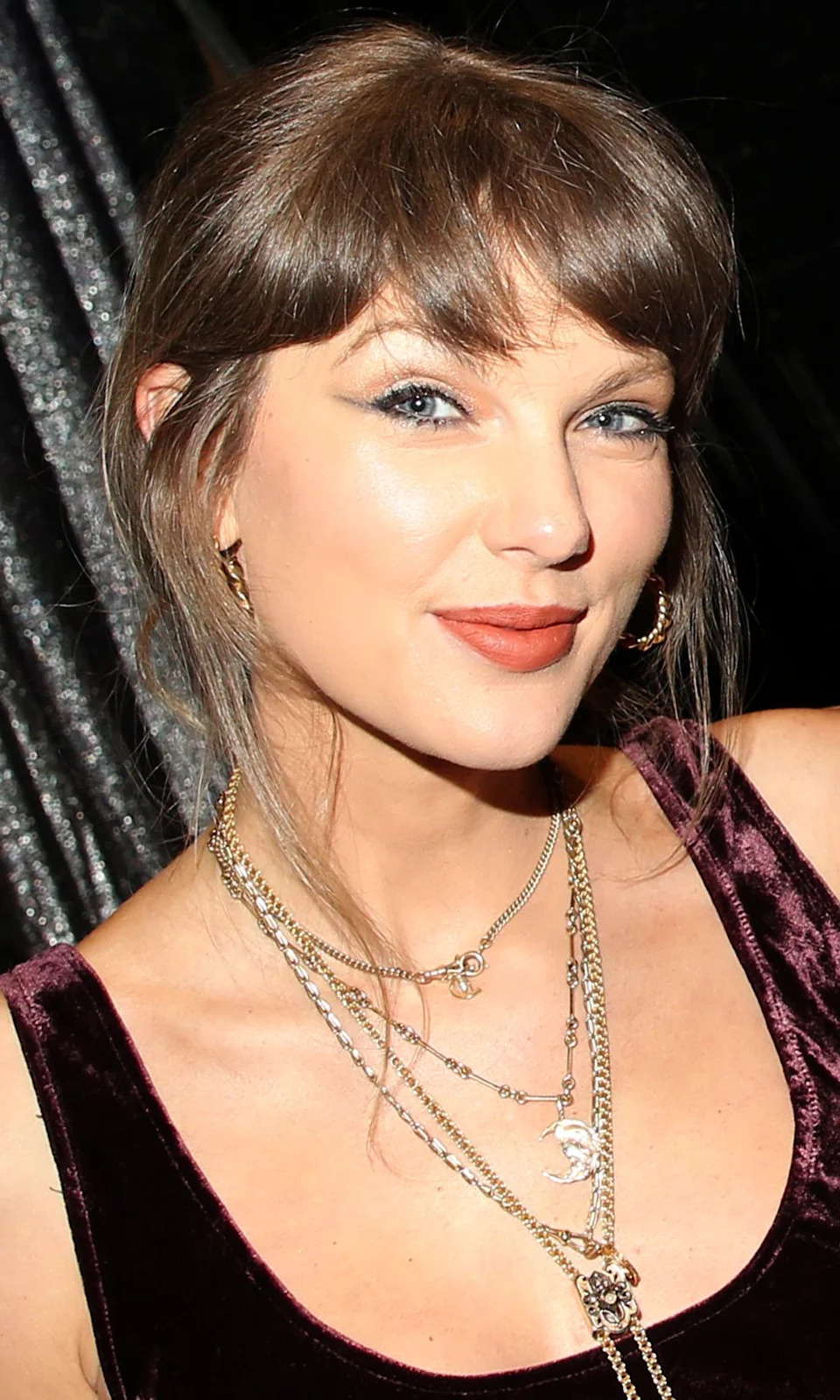
Strip away the hype and the cut is best described as a collarbone-to-shoulder-length long bob (lob) with a full, blunt fringe. Harper's Bazaar UK called it a sophisticated "midi" length, while Hola noted the result lands somewhere between a long bob and a classic medium-length cut. What it is not: an ultra-short bob, a chin-length crop, or a pixie. Anyone recreating it should be careful not to go shorter than the reference photos.
The defining elements, as seen across both sightings:
- Length: around the shoulders, grazing the collarbone — slightly longer than the blunt bob she is famously seen growing out in the mid-2010s.
- Perimeter: a relatively clean, one-length line, with just enough softness at the ends to curve rather than box.
- Fringe: the signature thick, blunt, eyebrow-skimming bangs she has worn through her most recent eras — explicitly left untouched by the chop.
- Color: her familiar warm blonde, unchanged. This was a length story, not a color story.
- Styling range: sleek and straight at Annabel's on August 12; soft natural waves at the wedding on August 15. Two nights, two textures, same cut — which is precisely the point of this length.
Bob, lob, or midi? Where this cut lands
Part of the online confusion came from vocabulary. In salon terms, the three lengths are usually defined like this:
- Bob: chin to jaw length. Graphic, high-impact, higher maintenance.
- Lob (long bob): chin to collarbone. The most requested "safe" short cut worldwide.
- Midi / mid-length: collarbone to just past the shoulders. Long enough to tie back, short enough to feel like a change.
Swift's 2026 cut sits on the border between the longest lob and the shortest midi. That in-between zone is deliberate: it delivers the psychological refresh of a chop while keeping the styling options — half-up styles, low ponytails, soft updos — that a true bob removes.
Why the untouched bangs matter
Keeping the fringe was the smartest part of the transformation. The bangs are one of Swift's most recognizable beauty signatures, and by leaving them full while removing length behind them, the change reads dramatic in silhouette but remains unmistakably her. For anyone copying the look at home, that is the lesson: the drama comes from the length contrast, not from reinventing your fringe.
Why the Chop Now? Reading the Timing
Swift has never treated hair as mere grooming. In her career, hair changes function like era markers: the blunt bob announced 1989's pop pivot as clearly as any single did, and the platinum crop underscored reputation's harder edge. So whenever she cuts her hair, the question "what era is this?" follows within hours. It is worth examining the timing of this chop from three angles — personal, seasonal, and speculative.
The personal angle: a new chapter, literally
The most straightforward reading is the personal one. Swift married Kelce on July 3, 2026, in a star-studded ceremony at Madison Square Garden attended by guests including Ed Sheeran, Gigi Hadid, Bradley Cooper, Tom Cruise, Adam Sandler, and Zoë Kravitz, according to USA TODAY. A haircut after a wedding is one of the oldest style traditions in the book — a visible line between "before" and "after." The fan comment that went viral on Instagram, "The post-wedding chop is real!!", captures exactly that reading.
The seasonal angle: 2026's midi moment
The chop also slots neatly into a verified trend. Harper's Bazaar UK reported that after a year that began with long, flowing hair and moved through countless bob revivals, mid-length cuts became the standout hair story of summer 2026, co-signed in the same weeks by Hailey Bieber, Kaia Gerber, and Daisy Edgar-Jones. The appeal is practical: short enough to feel manageable and low-maintenance in hot weather, long enough to style multiple ways. Swift did not chase a fad so much as land on the most sensible length of the season.
The speculative angle: is this a new album signal?
Then there is the reading fans enjoy most. Within hours of the Annabel's photos, comments like "A new haircut for a new album?!" and "New hair, new era" were circulating widely. Given Swift's history of encoding eras in her appearance — and given that The Life of a Showgirl, her twelfth studio album, anchored 2025 with its own showgirl glam and a jet-black promotional bob — it is entirely plausible that another visual reset precedes new music.
It is important to be clear about what that is: speculation. As of mid-August 2026, neither Swift nor her team has connected the haircut to any announced project. Treat the "new era" theory as fun fan analysis, not confirmed news. The confirmed facts are simpler: a newlywed woman, a month out of the public eye, emerged with the most versatile haircut of the summer.
What Stylists Say About the Mid-Length Moment
Professional commentary on the cut has been notably consistent: this is a stylist-approved choice, not a risky one. Gilbert Flores, hairstylist at The Six Salon in Mayfair, told Harper's Bazaar that for women who have worn their hair long for years, moving to a mid-length style creates a "modern shift while still feeling wearable." That phrase — modern shift, still wearable — is essentially the entire appeal of Swift's chop in six words.
The practical benefits stylists attach to this length bracket include:
- Illusion of volume for fine hair: removing excess weight at the ends lets the hair lift, so fine or thin hair looks fuller and more balanced.
- Graceful grow-out for thick hair: thicker hair types get built-in fullness and a shape that grows out seamlessly instead of collapsing into a triangle.
- Texture flexibility: a midi cut works across straight, wavy, and lightly curled textures, and can be worn sleek, waved, or tucked.
- Facial framing: paired with a full fringe like Swift's, the length defines the eyes and cheekbones without hiding the face.
The styling advice from the same coverage is equally transferable: use a flat iron for the polished, Annabel's-style finish, or a round hot brush to curve the ends under for a "freshly blown-out" wedding-guest finish, then finish with a shine spray or a few drops of lightweight hair oil. No exotic tools, no color commitment, no extensions to undo. That is why this particular chop has resonated beyond fandom — it is a celebrity haircut that ordinary hair can actually perform.
From Curls to Chop: Taylor Swift's Hairstyle Evolution
You cannot fully appreciate the 2026 cut without the timeline behind it. Swift's hair has been a public document for nearly two decades, and each era left a signature silhouette. Here is the complete arc.
| Years | Era | Signature Hair |
|---|---|---|
| 2006–2009 | Debut / Fearless | Long golden country curls |
| 2010–2013 | Speak Now / Red | Straightened styles with bangs, vintage waves, romantic updos |
| 2014–2016 | 1989 | The blunt bob with full bangs |
| 2017–2018 | reputation | Platinum blonde bob, slicked-back edges |
| 2019 | Lover | Softer blonde shag with curtain bangs |
| 2020–2021 | folklore / evermore | Natural waves, braids, rustic length |
| 2022 | Midnights | Vintage Hollywood waves, fringe returns |
| 2023–2024 | The Eras Tour / TTPD | Long waves, high ponytails, thick blunt bangs |
| 2025 | The Life of a Showgirl | Showgirl glam; jet-black promotional bob; mid-back blonde length by December |
| 2026 | Post-wedding | Collarbone-length lob with blunt bangs |
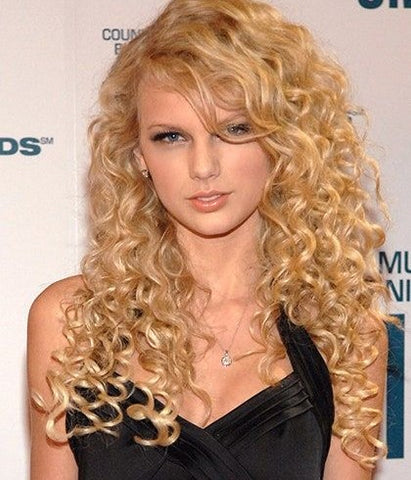
The country curls (2006–2009)
The story begins with curls — enormous, honey-blonde, unmistakable ringlets that matched the Nashville narrative perfectly. This was hair as brand: teenage, romantic, and instantly recognizable on award-show carpets. The curls were so defining that every later straightening or chop was read as a statement precisely because it broke from them.
The first bangs and the polished years (2010–2013)
Around 2010, Swift began alternating straightened, sleeker styles with a first full fringe, and by the Red era she was mixing vintage-inspired waves and structured updos with a more polished blonde. This period established the bangs as a recurring signature rather than a one-season experiment.
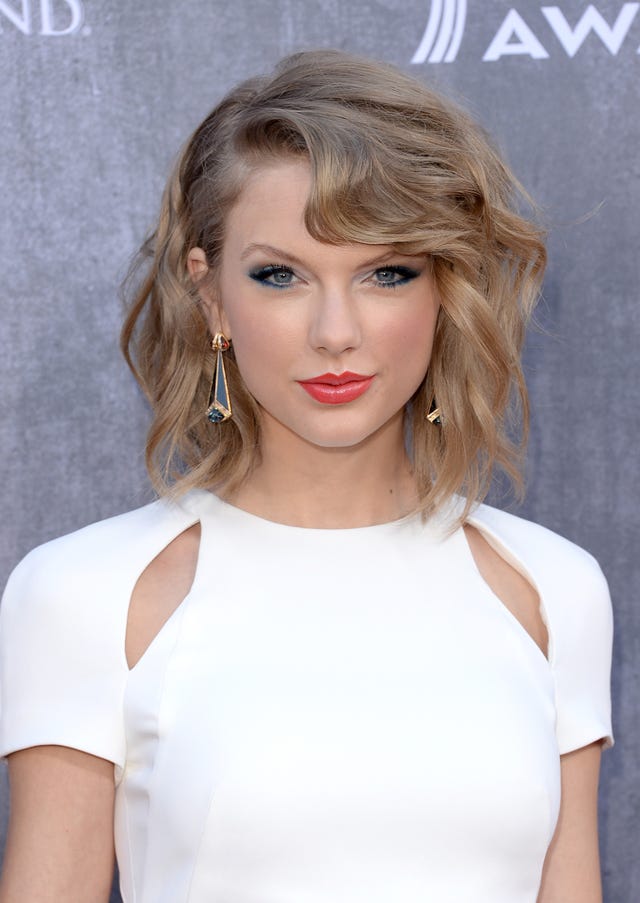
The bob that broke the internet (2014–2016)
When Swift chopped her hair for 1989, the bob became cultural shorthand for her pop reinvention. First worn in loose waves at chin-to-shoulder length, then sharpened into a sleeker, denser bob with heavy bangs by early 2016 — seen at its most graphic on the Grammy Awards carpet — the style drove a global surge in bob requests that stylists still reference a decade later.
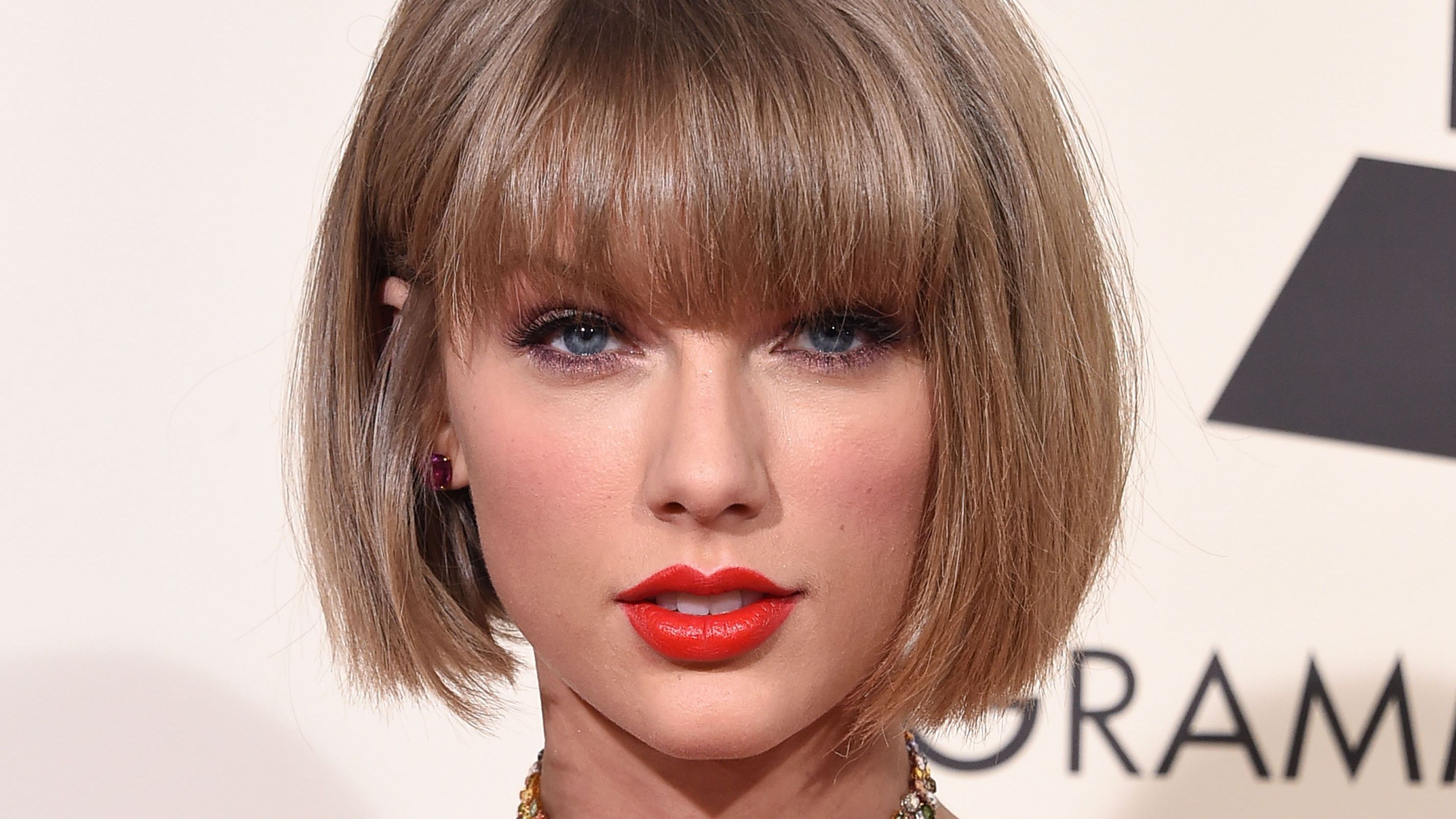
Platinum edge, then soft reset (2017–2019)
The reputation era cooled the blonde toward platinum and played with slicked-back, harder styling, while 2019's Lover softened everything again: warmer blonde, shaggier layers, curtain bangs, pastel-adjacent styling. The swing between edge and softness is a pattern — Swift rarely repeats two eras in a row.
The long-hair years (2020–2025)
From folklore's braided cottage aesthetic through Midnights' vintage waves and the marathon styling catalogue of The Eras Tour — high ponytails, Old Hollywood sets, glossy down-dos — Swift spent roughly half a decade in long hair, with the thick blunt bangs returning as the constant. By December 2025, her length sat around mid-back, as Vogue noted at the time. That is the length the August 2026 chop removed.
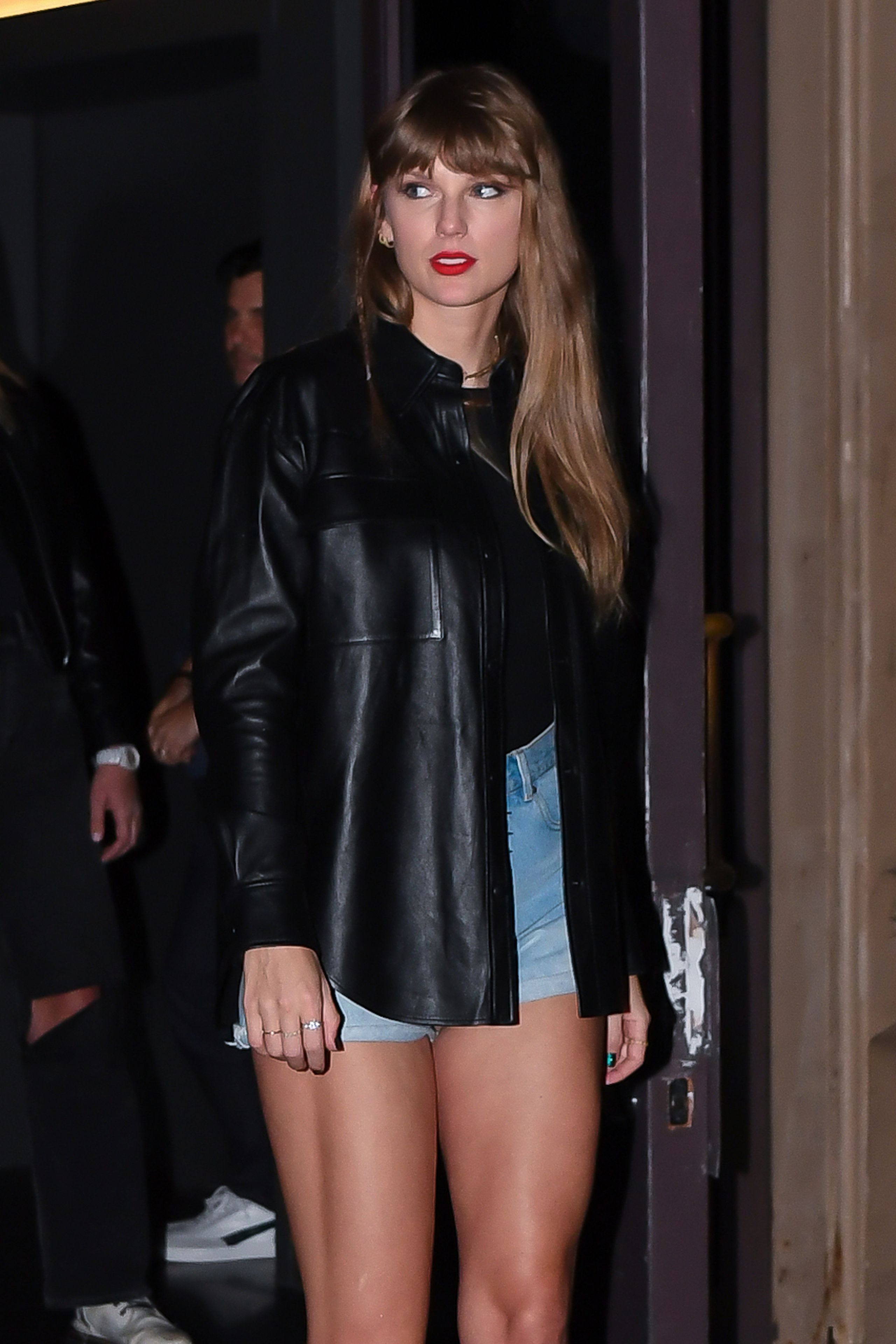
Seen as a whole, the timeline explains why the 2026 chop resonates. It is not a random trim. It is the first major length change since the 1989 bob cycle, arriving at a genuine life milestone, in the middle of a trend window that favors exactly this length.
2026 Lob vs. the Famous 1989 Bob
Search traffic tells us the first comparison everyone makes is with the 2014–2016 bob. The two cuts are relatives, not twins. Here is how they differ in practical terms.
| Feature | 1989-Era Bob (2014–2016) | 2026 Post-Wedding Lob |
|---|---|---|
| Length | Chin to jaw | Collarbone to just past shoulders |
| Fringe | Full, blunt bangs | Full, blunt bangs (unchanged signature) |
| Silhouette | Graphic, sharp, high-fashion | Soft, rounded, relaxed |
| Styling | Sleek or structured waves | Sleek straight or natural waves |
| Updo options | Very limited | Low ponytails, half-ups, soft updos possible |
| Maintenance | High — trims every 4–6 weeks | Moderate — trims every 6–8 weeks |
| Grow-out | Awkward, shape-dependent | Seamless, shape holds as it lengthens |
The short version: the 2014 bob was a statement cut that demanded commitment; the 2026 lob is a lifestyle cut that offers change without penalty. If the bob was a declaration, the lob is a deep breath.
How to Ask for Taylor Swift's New Short Hair at the Salon
The most common haircut regret comes from vague language — "shorter, like Taylor Swift" can produce a chin-length bob when you wanted a collarbone lob. Use this checklist instead.
- Bring two photos, not one. Bring the sleek August 12 photo and the wavy August 15 photo. Two textures of the same cut show your stylist the shape, not just one styled moment.
- Name the length precisely. Say "collarbone length" or "just past the shoulders," and confirm with your hands on your own body before any cutting starts.
- Protect the fringe plan. Decide explicitly whether you are keeping your current bangs, adding Swift-style blunt bangs, or leaving the front untouched. The bangs are half the identity of this look.
- Ask for weight removal, not just length removal. The cut's softness comes from slight texturizing at the ends so the hair curves instead of sitting in a box. Ask for "a soft perimeter that can curve under."
- Discuss your real texture. Swift's finish is heat-styled. If your hair is very curly or coily, the same shape will behave differently — ask your stylist how the line will fall air-dried, not just blown out.
- Book the follow-up before you leave. A lob keeps its shape for roughly 6–8 weeks; bangs need attention every 2–3 weeks. Schedule both now so the cut never enters an unmanaged phase.
- Agree on a grow-out plan. One advantage of this length is its exit strategy. Ask how the shape will transition if you decide in six months to go long again.
One honest warning: if your hair is currently mid-back or longer, this is a significant one-session change. Some stylists recommend doing it in two steps — length to a lob, then refining the perimeter two weeks later — so you can adjust to the silhouette before the final line is set. There is no shame in the two-step; even celebrities have stylists on call for corrections.
Styling and Upkeep: Getting the Look at Home
One cut, two documented finishes — sleek (Annabel's) and waved (Real World Studios). Both are achievable at home with a modest kit.
The tool kit
- A flat iron with adjustable heat for the sleek finish
- A round hot brush, or a round brush plus blow-dryer, for curved ends
- A heat protectant spray (non-negotiable at this length, where ends are visible and take daily heat)
- A lightweight hair oil or shine spray for the final pass
- A soft boar-bristle or mixed-bristle brush for smoothing the fringe
Finish one: the sleek Annabel's look
- Start with towel-dried hair, apply heat protectant, and blow-dry with tension using a paddle brush.
- Flat iron in small sections, following the brush angle slightly under at the ends.
- Smooth the fringe separately with a lower heat setting — bangs scorch and kink faster than the rest.
- Finish with a light shine spray held at arm's length, or one drop of oil warmed between palms and pressed over the surface.
Finish two: the soft wedding-guest wave
- Blow-dry with a round brush, directing the ends under toward the collarbone.
- Use a round hot brush or a large-barrel iron to add a loose bend — not tight curls — through the mid-lengths.
- Break the wave with your fingers and let the fringe sit full and blunt.
- Finish with lightweight oil on the ends only, keeping the crown natural.
The maintenance calendar
| Task | Cadence | Why |
|---|---|---|
| Perimeter trim | Every 6–8 weeks | Keeps the lob line at collarbone, prevents the shape drifting into "undefined medium hair" |
| Bang trim | Every 2–3 weeks | Blunt fringes lose their graphic line quickly; many stylists offer quick fringe trims between full appointments |
| Deep conditioning | Weekly | Shorter hair shows ends constantly; healthy ends are the entire aesthetic |
| Heat protectant | Every hot-tool day | This look is a heat-styled look; protection is what keeps it glossy instead of frayed |
Will the Cut Work for Your Face Shape and Hair Type?
The honest answer — and the one a good stylist will give you — is that the collarbone lob with a full fringe is one of the most universally adaptable cuts in circulation, but "adaptable" means it should be adjusted, not copied blindly.
- Oval faces: the reference look works as-is; the blunt fringe and shoulder length sit in natural balance.
- Round faces: ask for the length a touch below the collarbone and the fringe slightly softer or curtain-parted, so the face gains vertical line rather than width.
- Square faces: soft texturizing at the perimeter and a wavier finish, like the August 15 styling, diffuses a strong jawline beautifully.
- Heart-shaped faces: the full fringe is your friend — it balances a wider forehead — but keep some length-forward pieces around the chin.
- Longer faces: a blunt fringe shortens the face favorably; avoid over-straightening, which adds vertical drag, and prefer the waved finish.
By hair type: fine hair gains the most from this cut, because removing weight creates lift and the illusion of density. Thick hair should ask for internal weight removal so the perimeter does not puff into a triangle. Very curly or coily hair can absolutely wear the shape, but the cutting technique and the expected at-home finish are different conversations — bring photos and ask for the curly-hair version of the silhouette, not a straight-hair blueprint.
And one reality check for everyone: Swift's photos show professionally cut, professionally colored, heat-styled hair. Your version should be judged against your hair's reality, not against paparazzi lighting. A good stylist translates the shape to you; that translation is the service you are paying for.
Fan Reactions: "New Hair, New Era"
The response across social platforms was immediate and, for once, overwhelmingly warm. USA TODAY collected a sample of the Instagram reaction that captures the mood well:
"The post-wedding chop is real!!" — @miche_savvy
"She got a haircut, mama" — @msb.velasco
"A new haircut for a new album?!" — @zephyliosza
"Mother, I've been waiting to see you again 😭" — @2.t0.0n.4
"New hair, new era" — @hollyla.18
Read together, the comments show the three audiences this haircut landed with at once: hair enthusiasts celebrating a genuinely good cut, fans delighted by any post-wedding glimpse of a famously private newlywed, and the era-detectives hunting for album signals. That triple audience is exactly why a simple trim became a global style story within 48 hours.
What Comes Next? Separating Fact From Speculation
As of mid-August 2026, the confirmed facts are these: Swift debuted a shoulder-length lob with her signature blunt bangs on August 12 at Annabel's in London, wore it waved at the Jacobs–Sisk wedding on August 15, showed her wedding band publicly for the first time, and did so roughly six weeks after her July 3 wedding to Travis Kelce at Madison Square Garden. Kelce is in preseason with the Chiefs; Swift has kept a characteristically low public profile since the ceremony.
Everything beyond that — a surprise album, a new era color change, a shorter second chop — is unconfirmed fan theory. Given her track record, another visual chapter will certainly arrive eventually; it always does. But this article will age better if it ends where the evidence ends: with a newly married artist, a beautifully judged mid-length cut, and the most flattering hair trend of summer 2026 worn by its most famous practitioner.
Frequently Asked Questions
How short is Taylor Swift's new haircut, exactly?
It is a collarbone-to-shoulder-length cut — a long bob or "midi" length — not a chin-length bob or pixie. Photos from August 12 and 15, 2026 show the length sitting around the shoulders, which Harper's Bazaar described as her shortest style in years while Hola noted it lands between a lob and a classic mid-length cut.
Did Taylor Swift keep her bangs with the new short hair?
Yes. Her thick, blunt, eyebrow-skimming fringe was left untouched by the chop and appears full in both sightings. The bangs are one of her longest-running beauty signatures, and keeping them is what makes the new length read as a refresh rather than a reinvention.
When and where did she debut the new haircut?
The cut was first photographed on August 12, 2026, as she left Annabel's private members' club in London, then appeared again on August 15, 2026, at the wedding of recording engineers Oli Jacobs and Laura Sisk at Peter Gabriel's Real World Studios near Bath, styled in soft waves.
Is the haircut a teaser for a new album or era?
There is no confirmation. Fans quickly speculated "new hair, new era," and Swift's history of matching hair changes to album cycles makes the theory tempting. But as of mid-August 2026, neither Swift nor her team has linked the cut to any announced project, so treat the era theory as fan interpretation, not fact.
How is the 2026 cut different from her famous 1989 bob?
The 1989-era bob sat at chin-to-jaw length with a sharp, graphic line and high maintenance. The 2026 cut is longer — collarbone to just past the shoulders — softer at the perimeter, more versatile to style, and far easier to grow out, while keeping the same full-bangs signature.
What should I ask my stylist for to get this look?
Ask for a collarbone-length lob with a soft, slightly texturized perimeter that can curve under, and decide your fringe plan explicitly — full blunt bangs are half the identity of the look. Bring both the sleek and the wavy reference photos so your stylist sees the shape in two textures.
How much maintenance does this haircut need?
Moderate. Plan on a perimeter trim every 6–8 weeks to hold the lob line, a bang trim every 2–3 weeks if you wear a blunt fringe, weekly deep conditioning, and heat protection whenever you style — the glossy ends are the entire aesthetic of this cut.
The Takeaway
Taylor Swift's new short hair is that rare celebrity haircut that works as both symbolism and practical style advice. Symbolically, it closes one chapter — the long-haired Eras Tour and Tortured Poets years, capped by a July wedding at Madison Square Garden — and opens a visibly lighter one. Practically, it is the most sensible trending cut of 2026: a collarbone-length lob with a full fringe that adds volume to fine hair, grows out gracefully, and switches from sleek to waved in ten minutes.
If you take one thing from this story, make it the method, not just the inspiration: keep the fringe decision deliberate, name the length in inches of body position rather than vibes, bring two texture photos to the salon, and book the follow-up trims before the first cut is even finished. That is how a "post-wedding chop" stays chic in September instead of awkward by October.
New hair, new era — or simply new hair, new season. Either way, the chop of August 2026 is already one for the timeline, sitting right beside the curls of 2007 and the bob of 2014 in the long visual story of Taylor Swift's hair.
Enjoyed this breakdown? Share it with a friend who is debating the chop, tell us in the comments whether you would try the collarbone lob with blunt bangs, and check back for updates as the story — and possibly the era — develops.