
Tommy John: The Bionic Man Behind Baseball’s Most Famous Surgery
When Tommy John passed away on August 15, 2026, at the age of 83, baseball lost far more than a four-time All-Star with 288 career wins. It lost the man whose name became a household term in sports medicine — the patient behind Tommy John surgery, the pioneering elbow procedure that has saved thousands of pitching careers, from Little League diamonds to the World Series.
That dual legacy is why the name “Tommy John” generates two very different kinds of searches. Some people want to know about the pitcher: his career, his longevity, his passing, and his place in baseball history. Others want to understand the operation itself — what ulnar collateral ligament (UCL) reconstruction involves, how long recovery takes, what the success rates really are, and whether young pitchers can avoid needing it. This guide covers both, in one place, and separates confirmed facts from estimates throughout.
Below you’ll find a full profile of Tommy John the player, the true story of the 1974 operation that Dr. Frank Jobe estimated had a 1-in-100 chance of working, a plain-English explanation of how Tommy John surgery works, a realistic recovery timeline, the data behind the modern epidemic of UCL injuries, and practical, evidence-based guidance for parents and coaches of young pitchers. It reflects reporting and medical information available as of August 2026.
Table of Contents
- Tommy John at a Glance
- Who Was Tommy John? The Pitcher Behind the Name
- The Injury That Changed Baseball
- What Is Tommy John Surgery? UCL Reconstruction Explained
- Tommy John Surgery Recovery Timeline and Success Rates
- Why So Many Pitchers Need the Surgery Now
- Notable Players Who Have Had Tommy John Surgery
- Tommy John’s Legacy and Final Farewell
- One Name, No Connection: The Apparel Brand Question
- Tommy John FAQ
- The Bottom Line
Tommy John at a Glance
Before diving into the details, here is the quick factual picture of both the man and the procedure that shares his name.
| Fact | Detail |
|---|---|
| Full name | Thomas Edward John Jr., nicknamed “the Bionic Man” |
| Born | May 22, 1943, Terre Haute, Indiana |
| Died | August 15, 2026 (age 83), Bradenton, Florida |
| MLB career | 26 seasons, 1963–1989, with six franchises |
| Career record | 288–231, 3.34 ERA, 2,245 strikeouts |
| Honors | 4× All-Star (1968, 1978, 1979, 1980); runner-up for the 1977 NL Cy Young Award |
| Signature distinction | First pitcher to undergo UCL reconstruction (September 25, 1974); won 164 games after the surgery |
| The surgery today | Roughly 80–95% of players return to their sport; typical pitcher recovery runs 12–18 months |
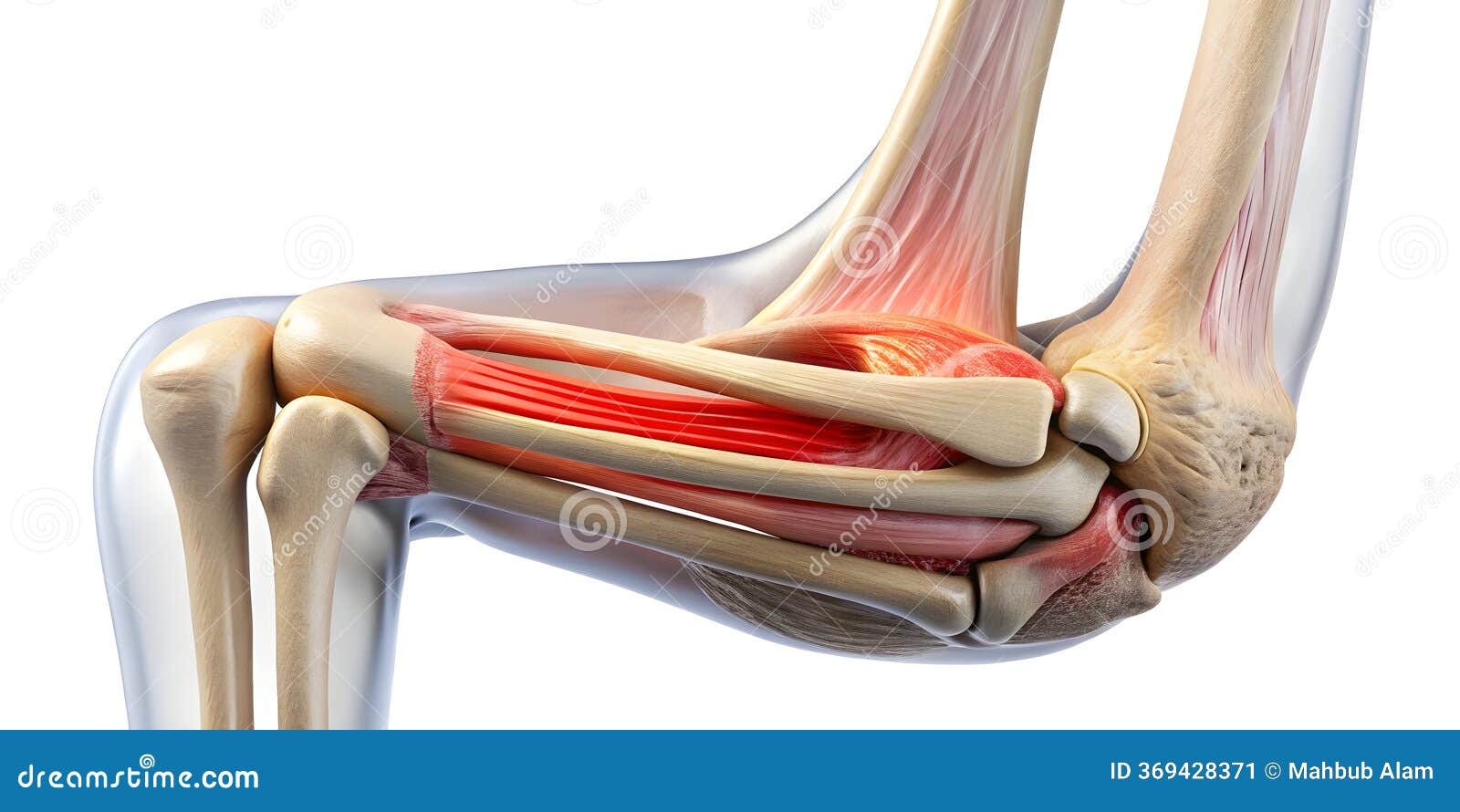
Tommy John surgery — formally called ulnar collateral ligament reconstruction — is an operation in which a damaged ligament on the inner side of the elbow is replaced with a tendon graft, usually taken from the patient’s own forearm, hamstring, or patellar tendon, or from a donor. Devised by Dr. Frank Jobe in 1974, it is now one of the most common and most studied procedures in all of sports medicine.
Who Was Tommy John? The Pitcher Behind the Name
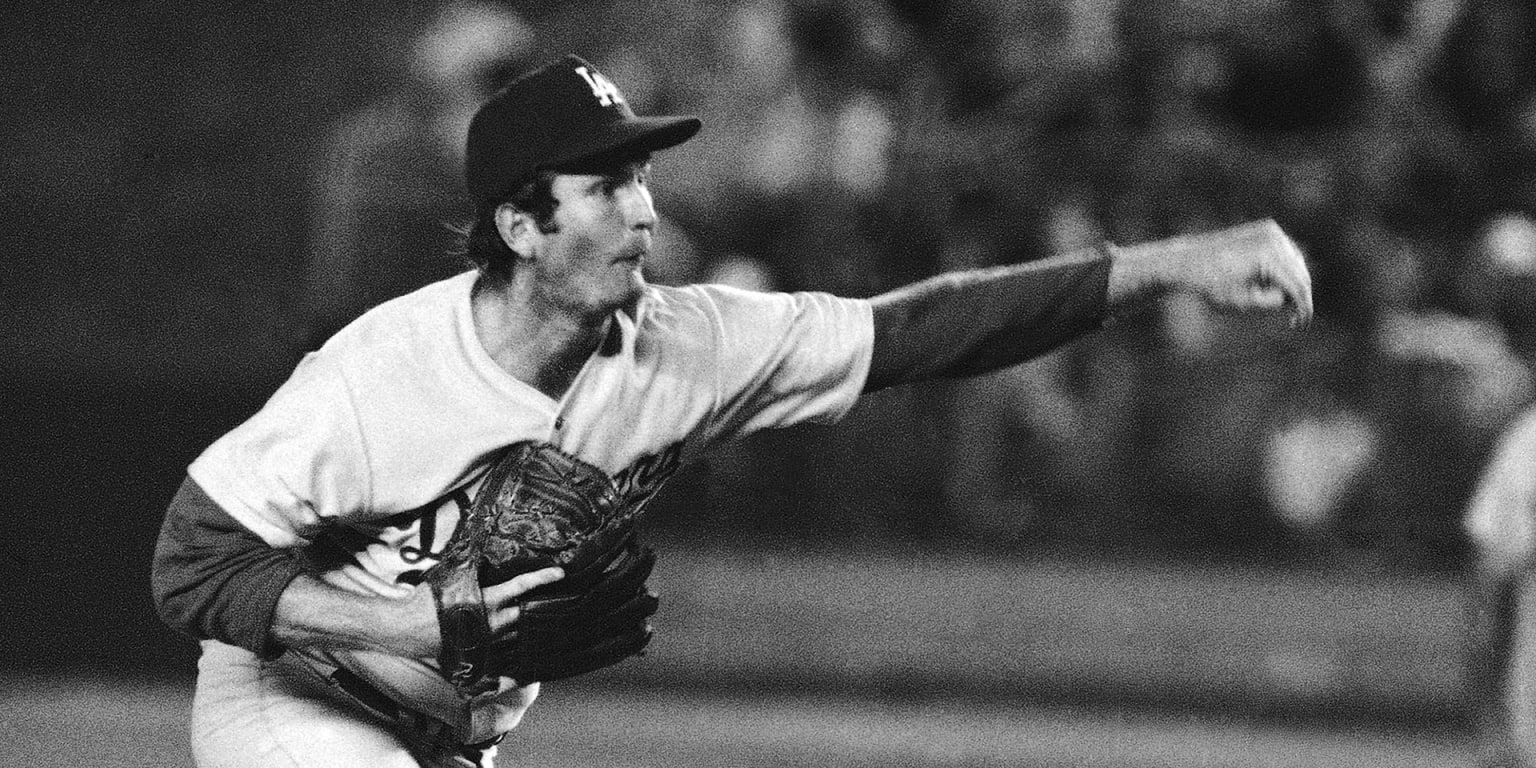
Long before he was a medical milestone, Tommy John was simply a durable, crafty left-hander who knew how to get hitters out. He was born in Terre Haute, Indiana, in 1943, attended Indiana State University, and made his major league debut with the Cleveland Indians on September 6, 1963, at age 20.
A journeyman who became an ace
John’s early career was unremarkable by Hall of Fame standards. He moved from Cleveland to the Chicago White Sox, where he developed into a reliable starter and earned his first All-Star selection in 1968. Traded to the Los Angeles Dodgers ahead of the 1972 season, he flourished: 11 wins in 1972, 16 in 1973, and a 13–3 record in 1974 when his season — and seemingly his career — came to a sudden halt.
John was not a power pitcher. He succeeded with control, movement, competitiveness, and an unusually smooth delivery. That profile matters, because it makes what happened next even more extraordinary: after his elbow reconstruction, a finesse lefty in his 30s didn’t merely return to the majors — he got better.
Career numbers that deserve more credit
Tommy John finished his career with a 288–231 record, a 3.34 ERA, and 2,245 strikeouts across 760 appearances and 700 starts — the eighth-most starts in MLB history — and 4,710⅓ innings pitched, 19th all-time. Among pitchers since 1900 who are not in the National Baseball Hall of Fame, only Roger Clemens has more career victories.
| Stat | Total |
|---|---|
| Wins–losses | 288–231 |
| Earned run average | 3.34 |
| Strikeouts | 2,245 |
| Appearances / starts | 760 / 700 |
| Innings pitched | 4,710⅓ |
| Wins before surgery / after | 124 / 164 |
| All-Star selections | 4 (1968, 1978, 1979, 1980) |
His teams included the Cleveland Indians, Chicago White Sox, Los Angeles Dodgers, New York Yankees, California Angels, and Oakland Athletics. From 1976 to 1981 — the stretch immediately after his surgery — he went 99–53 with a 3.06 ERA, an average of more than 235 innings per season, and a runner-up finish in the 1977 National League Cy Young vote. With the Yankees he posted consecutive 20-win seasons and made three straight All-Star teams, endearing himself to a fan base that rarely embraces visiting pitchers.
The Injury That Changed Baseball
July 1974: the moment the music stopped
In mid-July 1974, during a game against the Montreal Expos, John felt his left elbow give way. The diagnosis was a torn ulnar collateral ligament — and in that era, a torn UCL was effectively a death sentence for a pitching career. Pitchers with that injury simply retired; there was no proven surgical fix.
The Dodgers’ team physician, Dr. Frank Jobe, had an untested idea: replace the torn ligament with a tendon harvested from elsewhere in John’s body, threaded through holes drilled in the bones of the elbow. By Jobe’s own candid estimate at the time, the operation had roughly a 1-in-100 chance of succeeding. John, facing certain retirement, agreed to be the guinea pig.
September 25, 1974: a four-hour operation that made history
On September 25, 1974, Jobe performed the operation. Over roughly four hours, he took a tendon from John’s right forearm, drilled holes in the humerus and ulna of the left arm, and wove the graft through the bone tunnels in a figure-eight pattern to stand in for the destroyed ligament. John also required additional treatment for nerve damage in the arm, a detail that still echoes today: ulnar nerve problems frequently accompany UCL injuries and are often addressed during the same surgery.
John missed the entire 1975 season rehabilitating. When he returned in 1976, the baseball world watched closely — and then watched in astonishment as he proceeded to win 164 more games, forty more than he had won before the injury. He pitched until 1989, retiring at age 46. The procedure that was supposed to be a one-in-a-hundred gamble became, in time, the most famous eponymous surgery in sports.
“That surgery has since gone on to save the careers of countless pitchers, including many of the very best in the game today.” — Tommy John, in a farewell letter published during Old-Timers’ Day at Yankee Stadium, August 2026
What Is Tommy John Surgery? UCL Reconstruction Explained
The ulnar collateral ligament, in plain English
The ulnar collateral ligament is a band of tissue on the inside (medial side) of the elbow that connects the upper arm bone (humerus) to the forearm bone (ulna). Its job is to resist the valgus stress — the outward-pulling force — generated every time an arm whips a baseball overhead. It consists of three bands (anterior, posterior, and transverse), and the anterior band is the primary stabilizer during throwing.
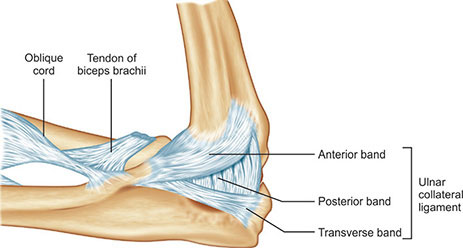
A throwing arm generates enormous rotational speed, and the UCL operates astonishingly close to its failure threshold with every maximal-effort pitch. Ligaments receive relatively poor blood supply, so micro-damage accumulates faster than it heals. Over thousands of repetitions — especially when a pitcher is fatigued, mechanically inefficient, or throwing year-round without rest — the ligament can fray and eventually tear, often with a distinctive “pop” that players and trainers recognize instantly.
How the reconstruction is performed
Modern UCL reconstruction follows the same logic as Jobe’s original, refined by five decades of experience. While techniques differ between surgeons, the core steps are consistent:
- Graft selection. The surgeon harvests a replacement tendon — most commonly the palmaris longus from the forearm, but sometimes hamstring, patellar, or toe-extensor tendon, or a donor allograft when the patient’s own tissue isn’t suitable.
- Bone tunnels. Small holes are drilled in the ulna and humerus at the points where the native ligament attached.
- Figure-eight weaving. The graft is threaded through the tunnels in a figure-eight configuration and tensioned to restore the ligament’s stabilizing role.
- Fixation and closure. The graft is anchored in place, and any ulnar nerve irritation or transposition needed is addressed before closing the 3-to-4-inch incision.
The operation typically lasts one to two hours in modern practice — far shorter than the four-hour marathon Jobe performed in 1974 — and most patients go home the same day or after an overnight stay.
The internal brace: a newer option on the spectrum
Not every UCL injury automatically leads to a full reconstruction anymore. Over the past decade, surgeons have developed UCL repair with internal brace augmentation, a technique that repairs the torn ligament and reinforces it with a high-strength, collagen-coated suture tape that acts like a seatbelt while the tissue heals. The internal brace was designed to augment — not replace — a repair or reconstruction, adding protection during healing.
For selected patients, particularly those with partial tears or good tissue quality, repair with an internal brace can mean a shorter recovery than a traditional reconstruction, and several prominent pitchers have chosen this route. However, candidacy depends on the tear pattern and tissue quality, and long-term comparative data are still being gathered. The decision between repair, repair-plus-brace, and full reconstruction is a case-by-case surgical judgment — not a menu item.
Tommy John Surgery Recovery Timeline and Success Rates
The single most common question about Tommy John surgery is simple: how long until the pitcher is back? The honest answer is that recovery is a marathon measured in seasons, not weeks. Protocols vary by surgeon and patient, but a representative framework looks like this:
| Phase | Approximate window | What happens |
|---|---|---|
| Protection | Weeks 0–2 | Elbow immobilized in a splint or hinged brace; wound healing; gentle motion of hand, wrist, and shoulder |
| Motion | Weeks 2–6 | Gradual restoration of elbow range of motion; brace adjustments; no resisted throwing |
| Strengthening | Weeks 6–12 | Progressive strengthening of the forearm, shoulder, scapula, and core |
| Interval throwing | Months 4–6 | Structured throwing program typically begins around 16 weeks post-op; flat-ground work at controlled distances |
| Mound progression | Months 6–12 | Bullpens, gradual velocity and pitch-count builds, often including minor-league rehab assignments |
| Return to competition | Months 12–18 | Full game action; MLB guidance generally cites a 12-to-18-month timetable for pitchers |
Position players, whose arms aren’t subjected to the same repetitive maximal stress, often return in roughly six months. Pitchers should plan on 12 to 18 months, and some take longer: one widely cited study of MLB pitchers found an average return of about 20.5 months. Rushing the timeline is one of the most dangerous mistakes in the process, because the graft remodels and strengthens slowly, and throwing too hard too early can stretch or rupture it.
Success rates: what the data actually says
The good news is real. Major medical centers and reviews generally report that 80% to 95% of baseball players return to their sport after UCL reconstruction, and by 2009 published estimates of complete recovery had climbed to 85–92% — a remarkable journey from Jobe’s original 1-in-100 guess.
The caveats matter just as much, and they are often left out of headlines:
- The American Sports Medicine Institute has noted that 10% to 20% of pitchers never regain their previous level after the surgery, even when they return to the mound.
- For MLB pitchers who undergo the procedure a second time, roughly a third never pitch in the majors again.
- Revision (repeat) surgery was reported at about 4% in one large review of MLB outcomes.
- “Return to play” is not the same as “return to prior performance.” Some pitchers come back equal or better — Tommy John himself being the founding example — but others return with diminished velocity or command.
In short, Tommy John surgery is one of the great success stories in sports medicine, but it is a salvage operation, not a performance upgrade. The persistent myth that the surgery “makes an arm stronger than before” is not supported by evidence; perceived improvements usually reflect better mechanics, stronger conditioning, and matured command developed during the long rehab.
Why So Many Pitchers Need the Surgery Now
If the procedure is so successful, why does it feel like an epidemic? Because the volume is real. By one 2024 estimate from the American Medical Association, roughly 35% of active major league pitchers — 35.3% of those active in 2023 — had undergone Tommy John surgery at some point, a figure the AMA described as a 29% rise since 2016. The 2023 and 2024 seasons alone produced a staggering run of star pitchers going down, and the list has kept growing into 2025 and 2026.
What’s driving the surge
- Velocity culture. Average fastball speeds have climbed steadily, and maximal-effort throwing multiplies the valgus load on the UCL with every pitch.
- Max-effort training. Weighted-ball programs, velocity camps, and showcase radar guns reward throwing harder — sometimes at the expense of tissue tolerance.
- Year-round play. Young pitchers who specialize early and never take an offseason accumulate micro-damage during years when growth plates are still developing.
- Fatigue. Research consistently identifies pitching fatigued as one of the strongest injury predictors, more so than any single pitch-count number.
The youth baseball connection
Perhaps the most sobering trend is the rise in UCL reconstructions among adolescent and high-school pitchers, reported by major academic medical centers including Columbia. Surgeons now routinely perform Tommy John surgery on players who haven’t finished high school — injuries that experts largely attribute to overuse: too many pitches, too many innings, too many teams, too little rest.
The encouraging part is that overuse injuries are the most preventable category in baseball. That’s the thinking behind Pitch Smart, the age-appropriate guideline system developed by MLB and USA Baseball, which pairs daily pitch limits with mandatory rest days and recommends that young pitchers take at least two to three months off from competitive pitching each year.
| Age | Daily maximum pitches (Pitch Smart) |
|---|---|
| 7–8 | 50 |
| 9–10 | 75 |
| 11–12 | 85 |
| 13–16 | 95 |
| 17–18 | 105 |
Required rest days increase with pitch totals, and the full table is updated periodically — check the current version on MLB’s official Pitch Smart hub before setting rules for your player.
A practical arm-care checklist for parents and coaches
- Follow age-based pitch counts and rest days, and honor them across all teams a player joins.
- Build in 2–3 months away from competitive pitching every year, and avoid overlapping seasons on multiple teams.
- Never let a child pitch through arm fatigue or medial elbow pain; fatigue is a red flag, not a rite of passage.
- Treat “arm soreness” on the inside of the elbow as a reason to stop and get evaluated, not to ice and push through.
- De-emphasize radar-gun chasing and year-round showcase circuits during growth years.
- Develop overall athleticism — strength, mobility, and conditioning — rather than early specialization in one sport.
- Watch for warning signs: loss of velocity or command, changes in mechanics, or a pitcher rubbing the inner elbow between innings.

Notable Players Who Have Had Tommy John Surgery
Tommy John’s successful comeback opened a door that thousands have since walked through. Three players who underwent the surgery — John Smoltz, Paul Molitor, and Billy Wagner — have been elected to the National Baseball Hall of Fame, the strongest possible endorsement of the procedure’s career-saving potential. A partial list of prominent names, with verified surgery years:
| Player | Surgery year(s) | What happened next |
|---|---|---|
| Tommy John | 1974 | The original; won 164 games post-surgery and pitched to age 46 |
| John Smoltz | 2000 | Returned as an elite closer, then re-established himself as a top starter; Hall of Famer |
| Jacob deGrom | 2010 and 2023 | Came back from both; a defining success story of the modern era |
| Justin Verlander | 2020 | Returned and won the 2022 NL Cy Young Award |
| Shohei Ohtani | 2018 and 2023 | Returned to the mound in 2025 while remaining a premier hitter |
| Sandy Alcantara | 2023 | Former Cy Young winner working his way back |
| Shane McClanahan | 2023 | Returned to competition after a full rebuild |
| Shane Bieber | 2024 | Former AL Cy Young winner in the post-surgery pipeline |
| Spencer Strider | 2024 (UCL repair with internal brace) | Chose repair-plus-brace rather than full reconstruction |
| Gerrit Cole | 2025 | Yankees ace missed the 2025 season; rehab extended into 2026 |
The range on this list — from a 1974 pioneer to two-way superstars and internal-brace patients — is itself the story: the procedure Tommy John gambled on has become a standard, continually evolving part of baseball’s fabric.
Tommy John’s Legacy and Final Farewell
Tommy John died at his home in Bradenton, Florida, on Saturday, August 15, 2026, after a period in hospice care and a battle with bladder cancer. He was 83. His agent confirmed the death, and tributes arrived from every corner of the game he shaped.
“While his incredible longevity and post-surgery achievements changed the fortunes and trajectory of countless athletes around the world, it also overshadowed his excellence as a pitcher… We pause to remember the totality of his legacy.” — New York Yankees statement, August 2026
The Yankees’ point is worth dwelling on. Because the surgery dominates his story, John is sometimes remembered as a medical curiosity rather than what he was: an exceptional pitcher. Three 20-win-caliber peak seasons on either side of the operation, four All-Star nods, a Cy Young runner-up finish, and nearly 5,000 innings of work would be a celebrated career even without the 1974 operation. With it, he became something larger — living proof that a diagnosis of “career over” could be rewritten.
Fittingly, his goodbye came on his own terms. During Old-Timers’ Day at Yankee Stadium on August 8, 2026 — one week before his death — John published a farewell letter thanking Dr. Frank Jobe, who “saved my arm and made it possible for me to continue pitching.” Former teammate Ron Guidry remembered him as a generous mentor who “would answer any question you had,” and Dodgers president Stan Kasten said his “courageous role in becoming the first to have surgery that would go on to bear his name can’t be overstated.”
One footnote to his legacy remains open: despite 288 wins, John has not been elected to the Hall of Fame, and his candidacies on various ballots have fallen short. Many historians argue the combination of his win total, his durability, and his singular role in baseball’s medical history makes him one of the most compelling borderline candidates of his era — a debate that his passing has only intensified.
One Name, No Connection: The Apparel Brand Question
A frequent sidebar question deserves a direct answer: the Tommy John underwear and apparel company is not connected to the pitcher. The brand, which launched in 2008 with a patented stay-tucked undershirt and has since expanded into underwear, socks, and loungewear, simply shares the name. There is no ownership, endorsement, or family relationship between the clothing label and Thomas Edward John Jr. — a coincidence that has confused more than one shopper searching for the pitcher and finding boxer briefs instead.
Tommy John FAQ
Why is it called Tommy John surgery?
The operation is named after the first patient to undergo it: pitcher Tommy John, on whom Dr. Frank Jobe performed the procedure on September 25, 1974. Its formal medical name is ulnar collateral ligament reconstruction. John’s successful return — and 164 subsequent wins — made the name stick across baseball and medicine.
How long does recovery from Tommy John surgery take?
For pitchers, the standard timetable is 12 to 18 months, with throwing typically resuming around 16 weeks after surgery. Position players often return in about six months. Timelines vary by surgeon, graft type, and individual healing, and some players — including several recent MLB stars — have taken longer than a year and a half.
What is the success rate of Tommy John surgery?
Most published sources report that 80% to 95% of players return to their sport, with complete-recovery estimates of 85–92% in modern series. However, 10–20% never regain their prior level, and outcomes are notably worse after a second reconstruction. It is a highly successful salvage procedure, not a guarantee.
Did Tommy John the pitcher recently pass away?
Yes. Tommy John died on August 15, 2026, at his home in Bradenton, Florida, at age 83, after battling bladder cancer and spending time in hospice care. His death, confirmed by his agent and mourned in statements from the Yankees and Dodgers, came one week after he published a farewell letter during Yankee Stadium’s Old-Timers’ Day.
Is Tommy John in the Baseball Hall of Fame?
No. Despite 288 career wins — the second-most since 1900 by a pitcher not enshrined — John has not been elected to the National Baseball Hall of Fame. His case remains a frequent topic among historians, who note that his surgical legacy sometimes overshadows a genuinely excellent pitching record.
Can young pitchers avoid needing Tommy John surgery?
Many cases are preventable, because youth UCL injuries are strongly linked to overuse. Following age-appropriate pitch limits like MLB’s Pitch Smart guidelines, taking 2–3 months off competitive pitching per year, avoiding pitching fatigued, and resisting year-round max-effort training all meaningfully reduce risk. No approach eliminates risk entirely, but overuse is the most modifiable factor.
What is the difference between Tommy John surgery and an internal brace?
Tommy John surgery replaces a torn UCL with a tendon graft woven through bone tunnels. An internal brace is a high-strength suture tape used to augment a ligament repair (or a reconstruction), protecting it while it heals. Repair with an internal brace can suit selected partial tears and may allow shorter recovery, but candidacy is a surgical judgment based on tissue quality.
The Bottom Line
Tommy John was two things at once: a very good major league pitcher who deserved more credit than his nickname allowed, and an accidental pioneer whose willingness to risk a 1-in-100 operation changed sports medicine forever. His death on August 15, 2026, closes the personal chapter, but the procedure that bears his name remains a daily reality across baseball — from youth leagues grappling with overuse to major league aces rebuilding their careers 12 to 18 painstaking months at a time.
The key takeaways for players, parents, and fans:
- Tommy John surgery is UCL reconstruction: a tendon graft replacing a torn elbow ligament, first performed by Dr. Frank Jobe in 1974.
- Recovery for pitchers typically runs 12–18 months, and success, while common (80–95% return to play), is never automatic.
- The modern surge in UCL injuries is driven by velocity, max-effort training, and year-round overuse — and youth injuries are largely preventable through rest, pitch limits, and fatigue management.
- The man himself, “the Bionic Man,” won 164 games after the surgery that was supposed to end his career — a record of resilience that no statistic can fully capture.
If you’re a parent or coach, bookmark the arm-care checklist above and review current Pitch Smart limits before the next season. If you’re a fan watching a favorite pitcher begin the long road back, remember the 31-year-old lefty who went under the knife in 1974 with hundred-to-one odds — and came back to win 164 more games. Few names in baseball history are attached to so much second-chance hope as Tommy John.
Found this guide useful? Share it with your team’s group chat or leave a comment below with the Tommy John surgery story you remember most — reader questions help shape future deep dives.